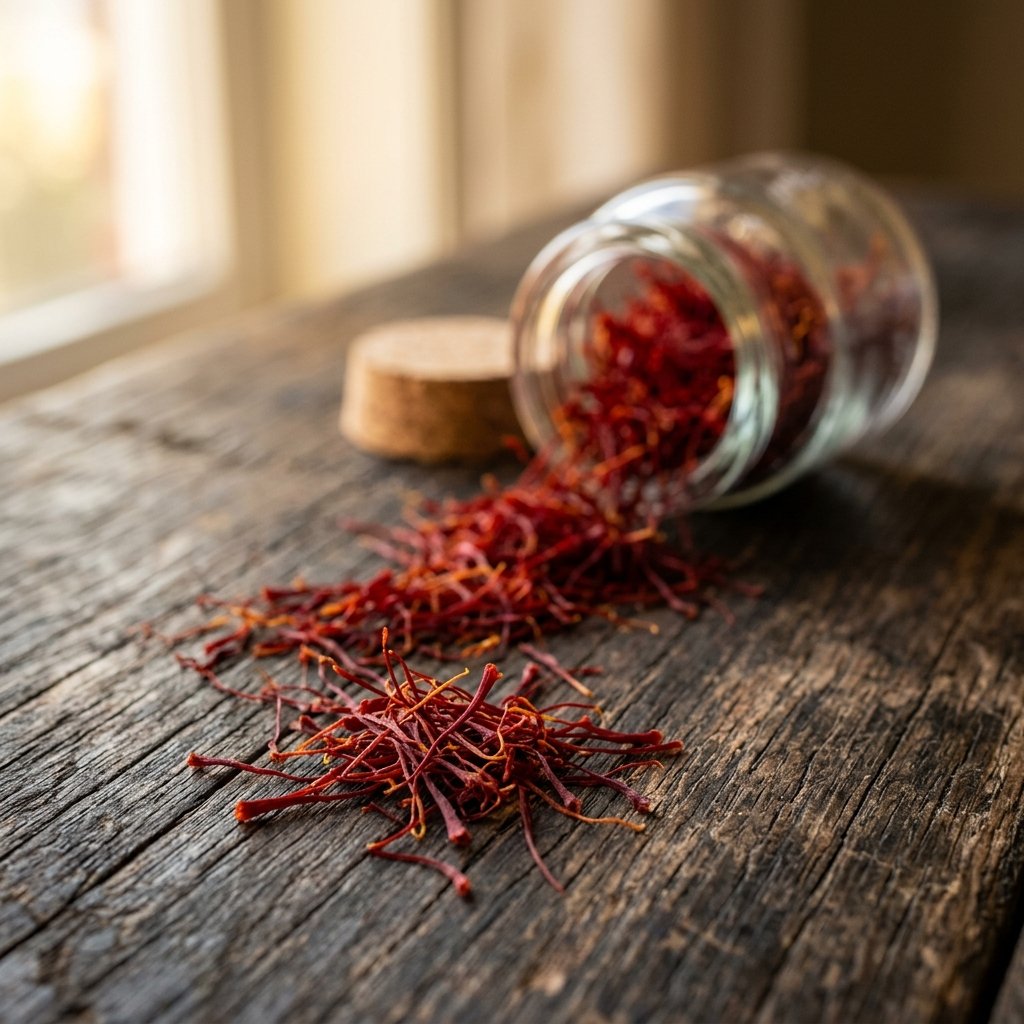
Three stigmas. That's all one Crocus sativus flower gives you. Someone has to bend down, pick them by hand, and dry them before sunrise ruins the color — and that's before the spice even reaches a jar. This is why a single kilogram of top-grade Kashmiri saffron can cost more than a decent used car, and why so much of what's sold as \"Kashmiri saffron\" online isn't Kashmiri, and sometimes isn't even saffron.
If you've ever stood in front of a jar of red threads wondering whether you're about to overpay for dyed corn silk, this guide is for you. We'll walk through what actually makes Kashmiri saffron different from the saffron grown in Iran or Spain, how the grading system works, what the research says about its benefits, how to store it so it doesn't lose potency, and — most importantly — how to tell real kesar from a convincing fake before you hand over your money.
Get the short version first: try 3–4 strands of genuine Kashmiri saffron in warm milk tonight and see if you notice the difference within a week.
What Is Kashmiri Saffron?

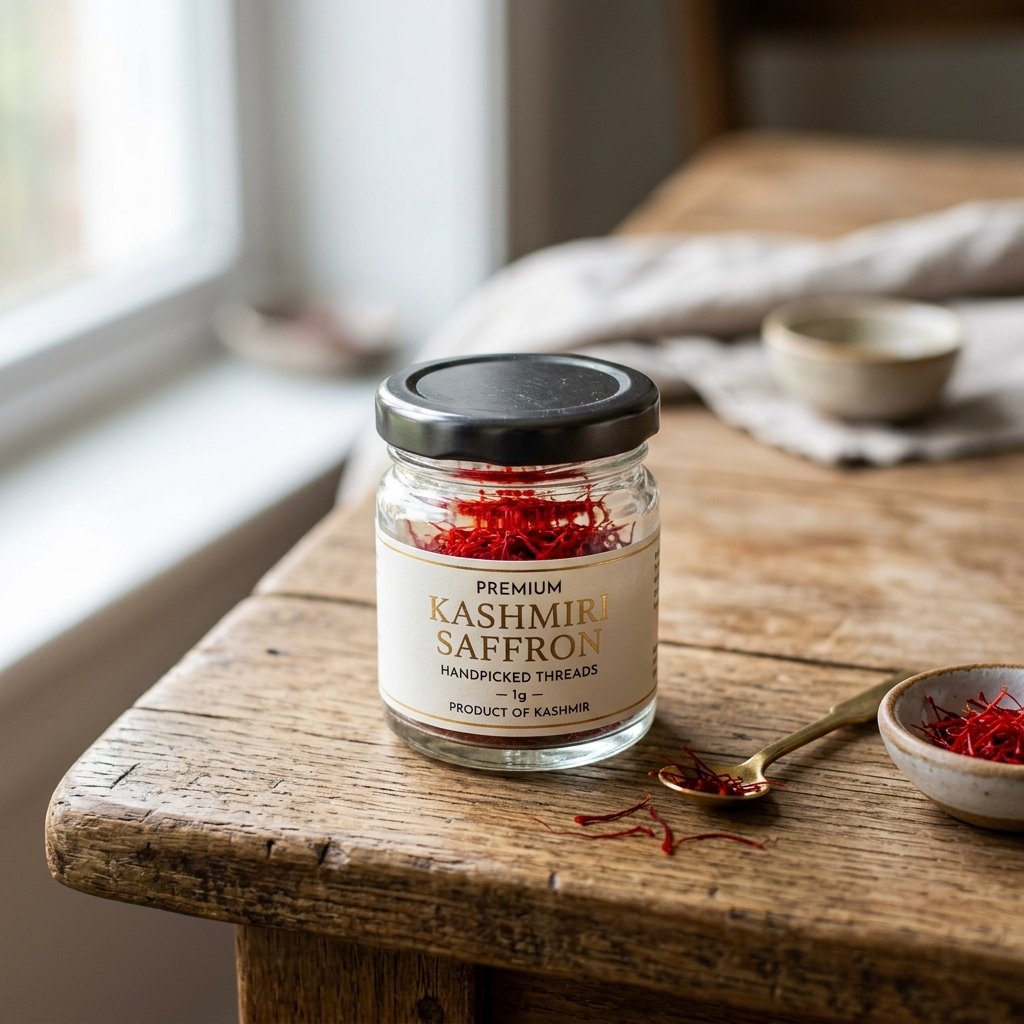
Kashmiri saffron is saffron cultivated exclusively in the Kashmir Valley, primarily in the Pampore region of Jammu and Kashmir, at altitudes between roughly 1,600 and 1,800 meters. It comes from the Crocus sativus flower, which blooms for just two to four weeks each October and November. Each flower produces exactly three red stigmas — the female part of the flower — and those stigmas are hand-picked, one flower at a time, then carefully dried to become the saffron threads you see in a jar.
What separates it from saffron grown elsewhere isn't sentiment — it's chemistry and terroir. Kashmir's unique combination of altitude, karewa (clay-loam) soil, and a distinct dry autumn climate produces stigmas with a notably higher concentration of three key compounds: crocin (responsible for color), safranal (responsible for aroma), and picrocrocin (responsible for the slightly bitter, honey-like taste). Lab analysis of Kashmiri saffron regularly shows crocin content in the 8–12% range, compared to roughly 6–8% in much of the saffron sold globally from other origins.
In 2020, Kashmiri saffron received a Geographical Indication (GI) tag from the Government of India — a legal protection similar to Champagne in France or Darjeeling tea, meaning only saffron actually grown in the designated Kashmir region can legally carry the \"Kashmiri saffron\" name for GI-certified sale. This matters more than most buyers realize, because it gives you an actual legal standard to check against instead of just trusting a seller's word.
Saffron cultivation in Kashmir isn't a modern industry either. Historical records trace it back more than 2,000 years, likely introduced by Persian traders who recognized that the valley's climate mirrored the conditions saffron needs to thrive. Entire families in Pampore, Pulwama, and Budgam have farmed the same karewa fields for generations, and the harvest window is still small enough that an unusually warm or wet October can wipe out a meaningful chunk of the year's yield.
Why Kashmiri Saffron Costs So Much
It helps to actually walk through the math, because \"expensive spice\" doesn't explain much on its own.
- Flower-to-thread ratio: It takes roughly 150,000 flowers to produce a single kilogram of dried saffron threads.
- Labor intensity: Every flower is hand-picked at dawn, when the stigmas hold the most moisture and color, and every stigma is separated from the flower by hand — there's no mechanized shortcut that hasn't degraded quality when tried.
- Yield instability: A single hectare of karewa land typically yields only a few kilograms of dried saffron per season, and yield swings hard with rainfall, temperature, and pest pressure.
- Drying loss: Fresh stigmas lose roughly 80% of their weight during drying, so what looks like a generous harvest shrinks dramatically by the time it's shelf-ready.
- Retail markup on genuine product: Even accounting for middlemen, most of the price reflects real scarcity, not manufactured hype — reputable Kashmiri saffron commonly retails in the range of ₹250,000–₹350,000 (roughly ,000–,200 USD) per kilogram for top-grade Mongra, though most households buy it in 1–5 gram jars.
That last point is worth sitting with. A one-gram jar at – sounds expensive per gram, but it's genuinely enough for months of daily use, since a proper dose is only a handful of threads.

Understanding Saffron Grades: Mongra vs Lacha vs Others
Not all Kashmiri saffron is graded the same, and this is where a lot of buyers get confused — or get taken advantage of.
Mongra (Mogra): The premium grade. Only the deep-red stigma is used, with the yellow-white style (the stalk connecting the stigma to the flower) trimmed off entirely. This gives the deepest color, strongest aroma, and highest crocin concentration. It's the grade most recommended for medicinal or skincare use, where potency per thread matters most.
Lacha: The most commonly purchased grade for everyday Indian households. It includes the red stigma along with a small portion of the yellow style still attached. It's slightly less potent than Mongra strand-for-strand but considerably more affordable, making it the practical choice for daily cooking and kesar doodh.
Mishri/Guchhi and other regional grades: Some sellers use additional local classifications, but Mongra and Lacha cover the overwhelming majority of what's sold as genuine Kashmiri saffron.
A simple rule of thumb: buying for skin, health, or a gift → Mongra. Buying for everyday cooking and tea → Lacha is an excellent, more economical choice.
The Science-Backed Health Benefits of Kashmiri Saffron
Saffron has been used across Ayurveda, Persian medicine, and Unani traditions for centuries, and in the last two decades, a meaningful body of peer-reviewed research has started to catch up with those traditional claims. Here's what's actually been studied.
1. Mood Support and Mild Depression
Saffron is sometimes nicknamed \"the sunshine spice\" because of its effect on mood. Multiple clinical trials have compared saffron supplementation to both placebo and, in some cases, low-dose antidepressants for mild-to-moderate depression, with several showing meaningfully reduced depression scores over 6–8 weeks. The proposed mechanism involves safranal and crocin supporting serotonin activity in the brain.
2. Memory and Cognitive Function
Crocin, saffron's primary antioxidant compound, has shown promise in small studies for supporting learning, memory, and protecting against age-related cognitive decline. Early research has also looked at whether saffron compounds can help slow the accumulation of certain proteins linked to neurodegenerative conditions, though this work is still preliminary and mostly done in lab and animal models rather than large human trials.
3. Antioxidant and Anti-Inflammatory Effects
Saffron contains a potent trio of antioxidants — crocin, crocetin, and safranal — along with kaempferol. These compounds help neutralize free radicals and have been studied for their role in reducing markers of inflammation throughout the body, which is part of why saffron shows up so often in both internal wellness routines (like Shilajit resin) and topical skincare.
4. Skin Health
Kesar-infused face masks and creams are a long-standing part of South Asian beauty routines, and there's a reasonable mechanistic explanation behind it: the same antioxidant compounds that reduce oxidative stress internally also appear to help even out skin tone and reduce the appearance of dark spots and hyperpigmentation when applied topically over several weeks. Most users report visible changes only after 4–6 weeks of consistent use, not overnight.
5. Digestive Support
Traditional use includes saffron for digestive complaints, and some research suggests its anti-inflammatory pathways may support a healthier gut environment by discouraging harmful bacteria while favoring beneficial strains — though this area needs more robust human trials before firm claims can be made.
6. Women's Health
In Ayurveda, saffron is traditionally used to ease menstrual discomfort and is often recommended (in very small, controlled amounts, and only with medical guidance) to support wellness during pregnancy. Because saffron in higher doses can act as a uterine stimulant, pregnant women should never use it beyond typical culinary amounts without a doctor's explicit approval.
7. Heart Health and Immunity
Saffron's antioxidant load has also been studied for supporting cardiovascular health markers and general immune resilience, largely through its role in reducing oxidative stress — one of the underlying contributors to a wide range of chronic conditions.

How to Identify Real Kashmiri Saffron (And Spot Fakes)
This is the section most buyers actually need, because saffron adulteration is common enough that entire investigative reports have been written about it. Here are tests you can do at home before you commit to a purchase.
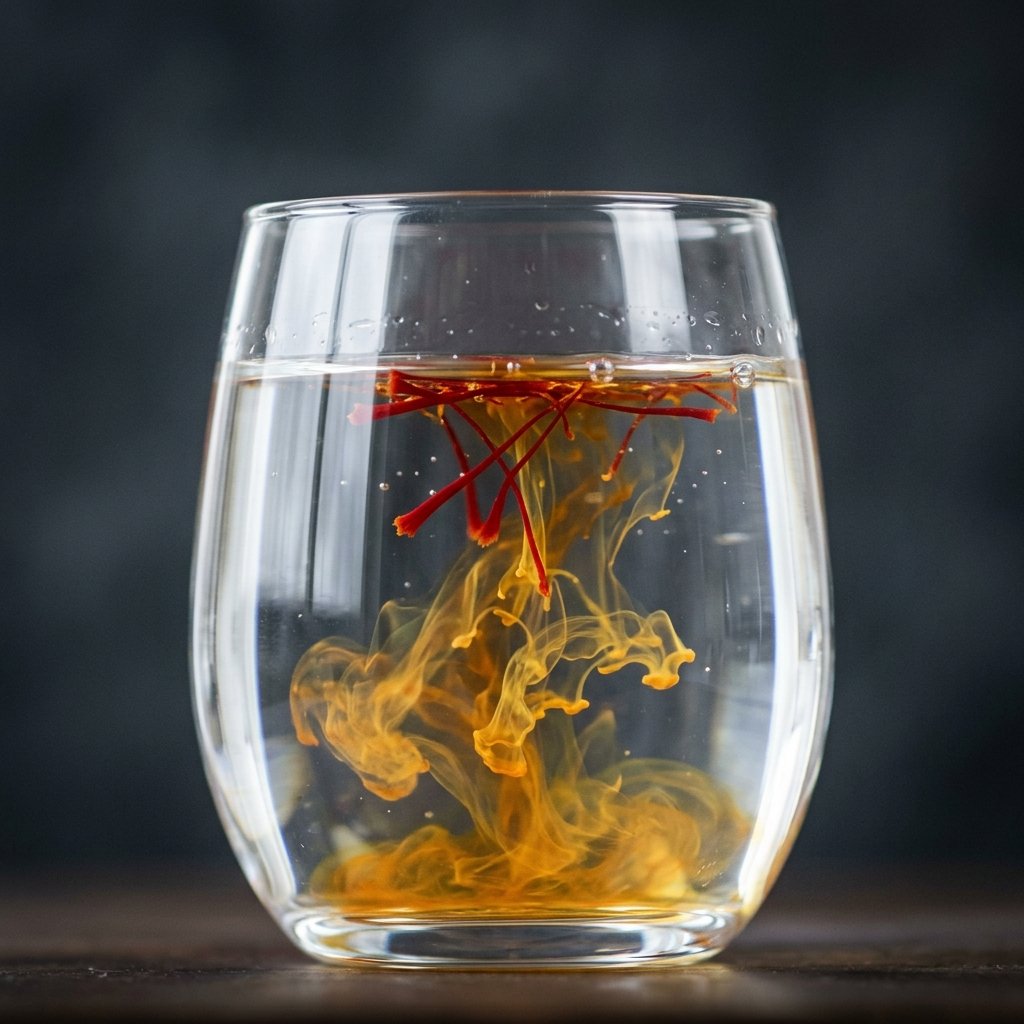
1. The color-release test. Drop 2–3 threads into a glass of lukewarm water or milk. Genuine saffron releases color slowly, taking a minute or more to gradually tint the liquid golden-yellow. Fake or dyed saffron (often dyed corn silk, beet fibers, or safflower/\"bastard saffron\") releases color almost instantly and turns the water deep red or orange within seconds — a major red flag.
2. The texture check. Real saffron threads are trumpet-shaped, slightly fibrous, and irregular when you look closely. They should feel dry but not brittle to the point of crumbling into powder when handled gently.
3. The smell test. Genuine Kashmiri saffron has a distinct, slightly sweet, hay-like, honeyed aroma — not a sharp, medicinal, or metallic smell. If it smells like almost nothing, or smells \"off,\" be cautious.
4. The price test. If a seller offers \"pure Kashmiri saffron\" at a price dramatically below market rate, it almost certainly isn't. Genuine saffron's cost is driven by real scarcity — there's no legitimate way to sell authentic Mongra for a fraction of typical market pricing.
5. Check for the GI tag and origin documentation. Reputable Kashmiri sellers will reference the GI certification and, ideally, be able to speak specifically to which region (Pampore, Pulwama, Budgam) their saffron comes from — vague sourcing claims are worth questioning.
6. Look at the color consistency. Genuine threads show natural variation in shade — deep red at the stigma, sometimes slightly lighter toward the ends. Perfectly uniform, bright-red-all-over threads can be a sign of dyeing.
How to Use Kashmiri Saffron Daily
You don't need much. A daily culinary dose of 3–7 strands is enough for most people to enjoy the flavor, aroma, and antioxidant benefits without any risk, and it's genuinely difficult to get anywhere near an unsafe amount through normal cooking and tea use — doses above roughly 1.5 grams per day start entering territory best avoided without medical supervision.
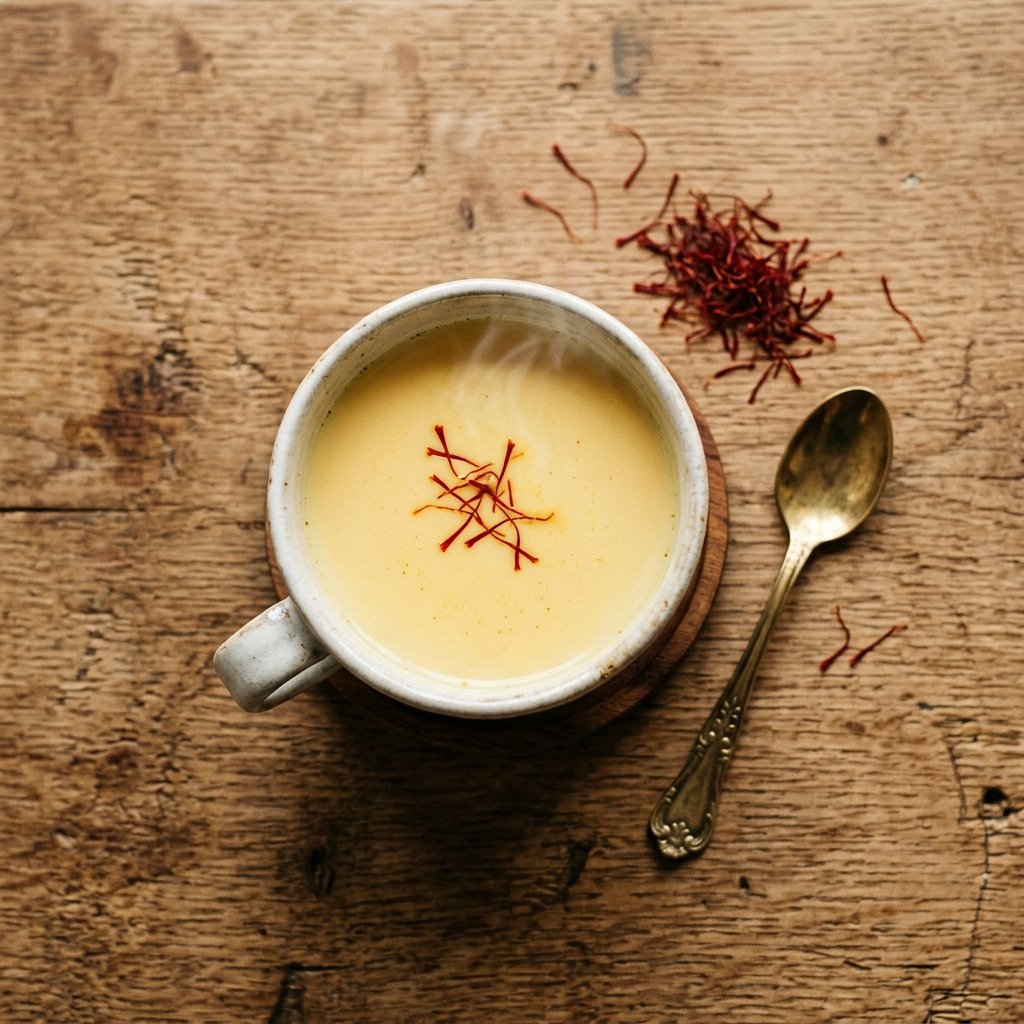
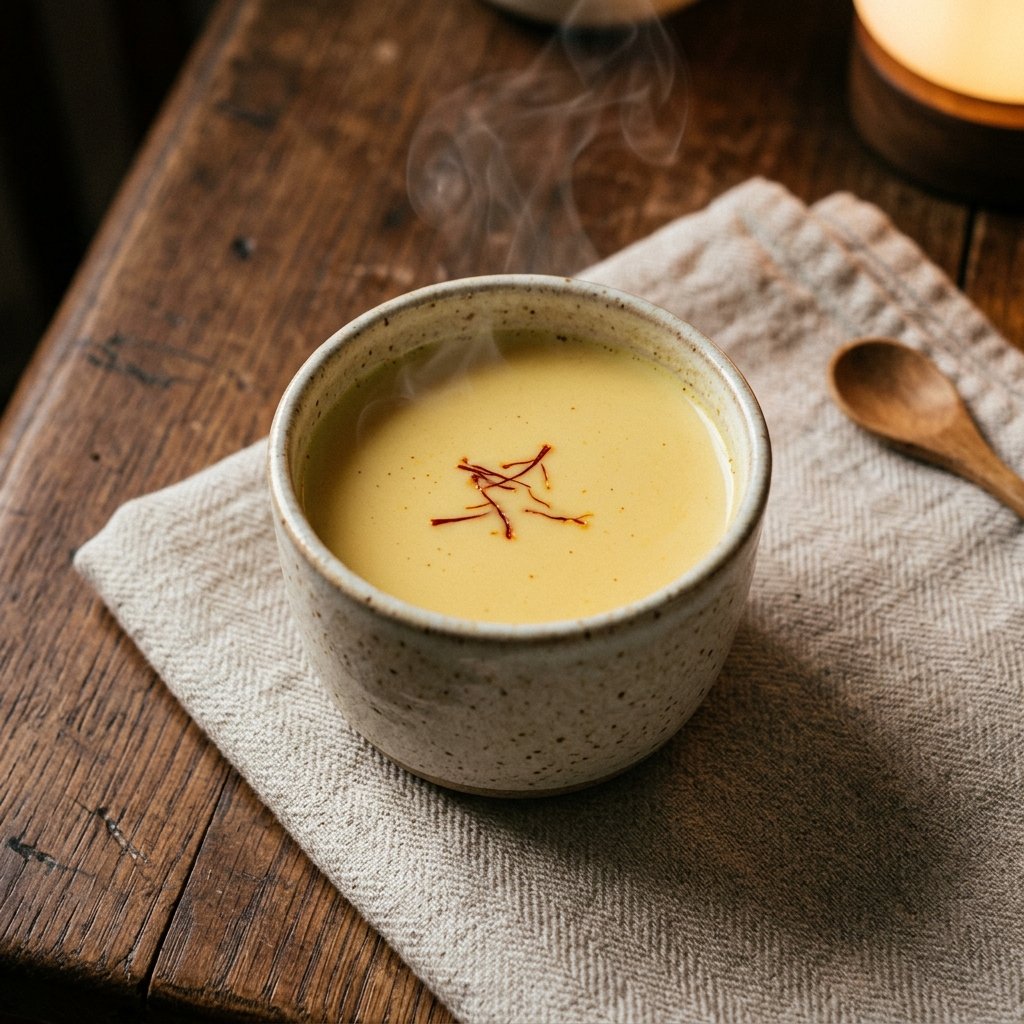
Kesar Doodh (Saffron Milk): Warm a cup of milk, add 4–5 strands, let it steep for 5–10 minutes before drinking — a traditional bedtime ritual said to support sleep and relaxation.
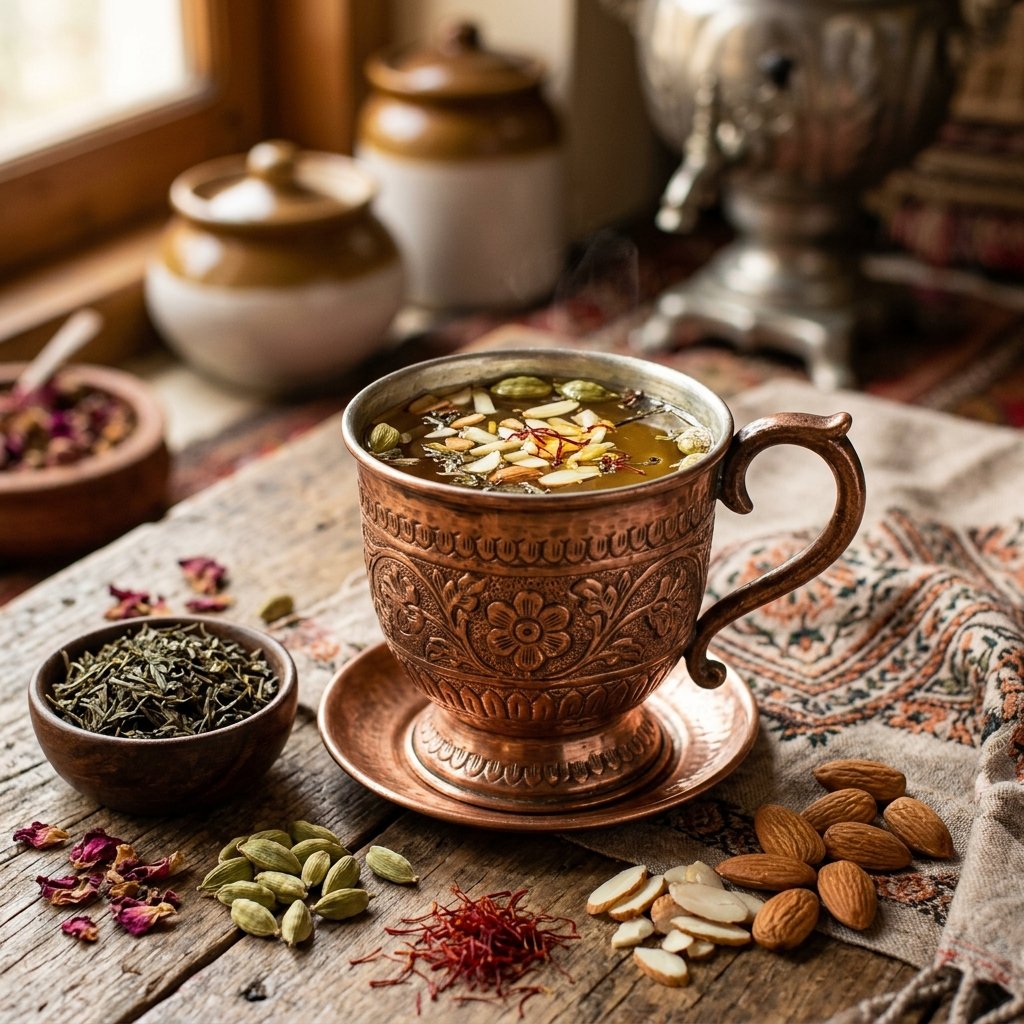
Kashmiri Kahwa: Saffron is one of the defining ingredients of this green-tea-based drink, added at the end of brewing to preserve its delicate aroma. (If you want a full walkthrough, see our Kashmiri Kahwa recipe.)
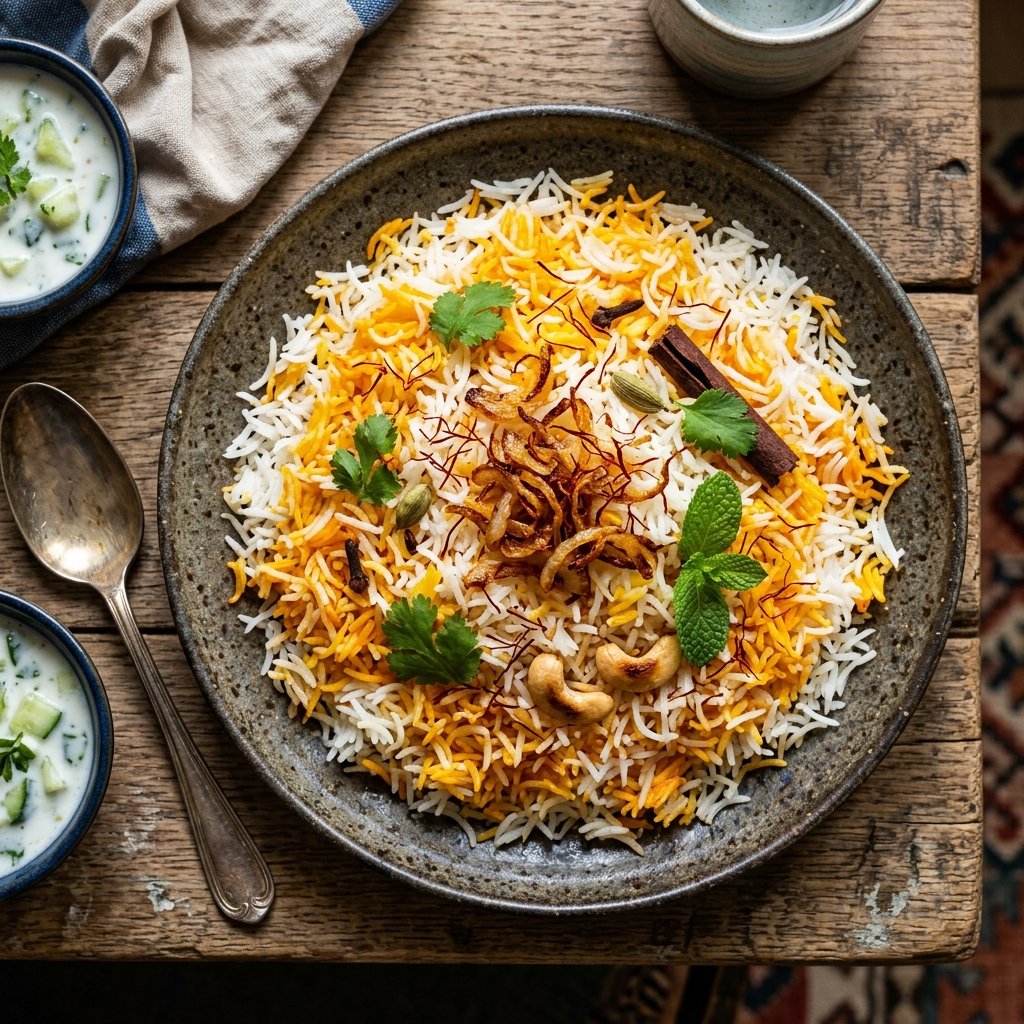
Biryani and pulao: A pinch bloomed in a tablespoon of warm milk or water, then drizzled over rice partway through cooking, gives that signature golden color and aroma without overwhelming the dish.
Desserts: Kheer, phirni, and gulab jamun syrup all traditionally use a few strands steeped in warm milk or sugar syrup.
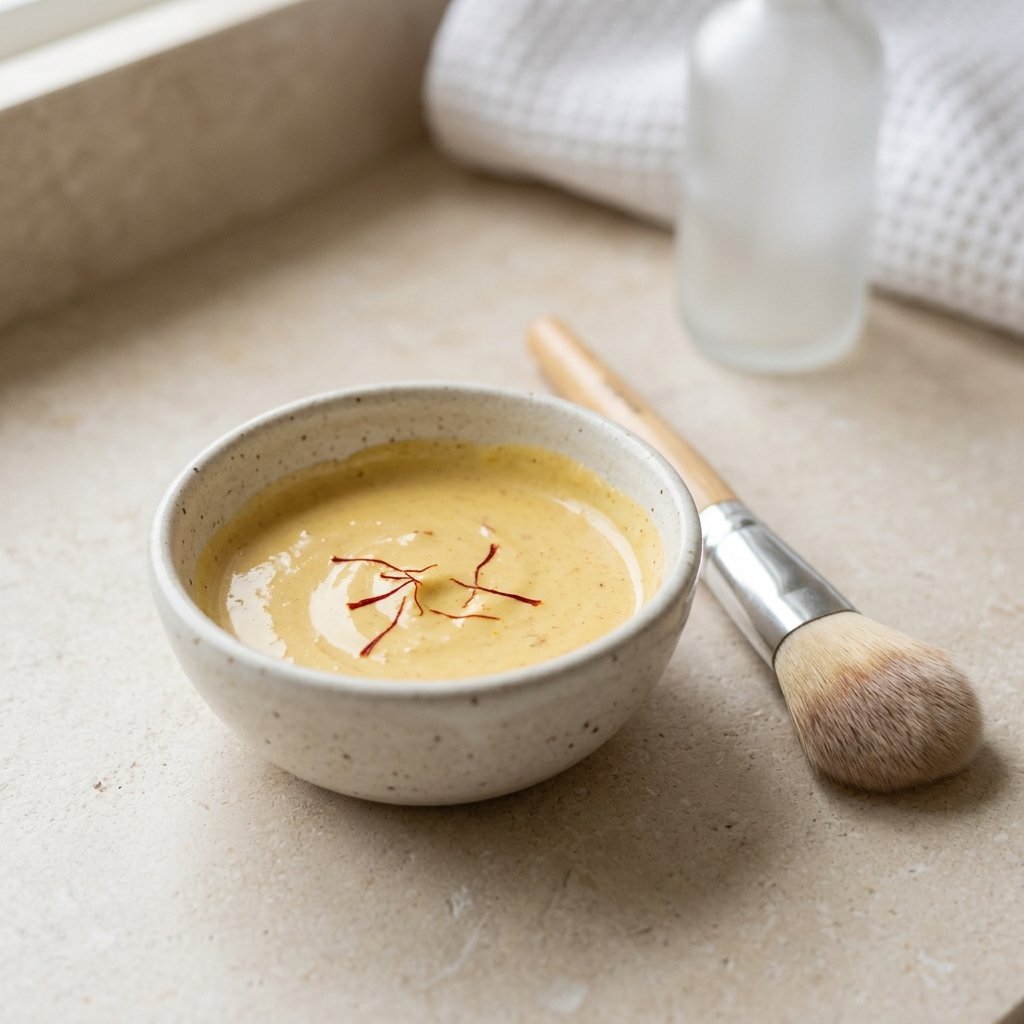
Face masks: A few strands soaked in raw milk or honey for 15–20 minutes, then applied as a mask, is a common home skincare routine — patch-test first if you have sensitive skin.
How to Store Kashmiri Saffron So It Doesn't Lose Potency
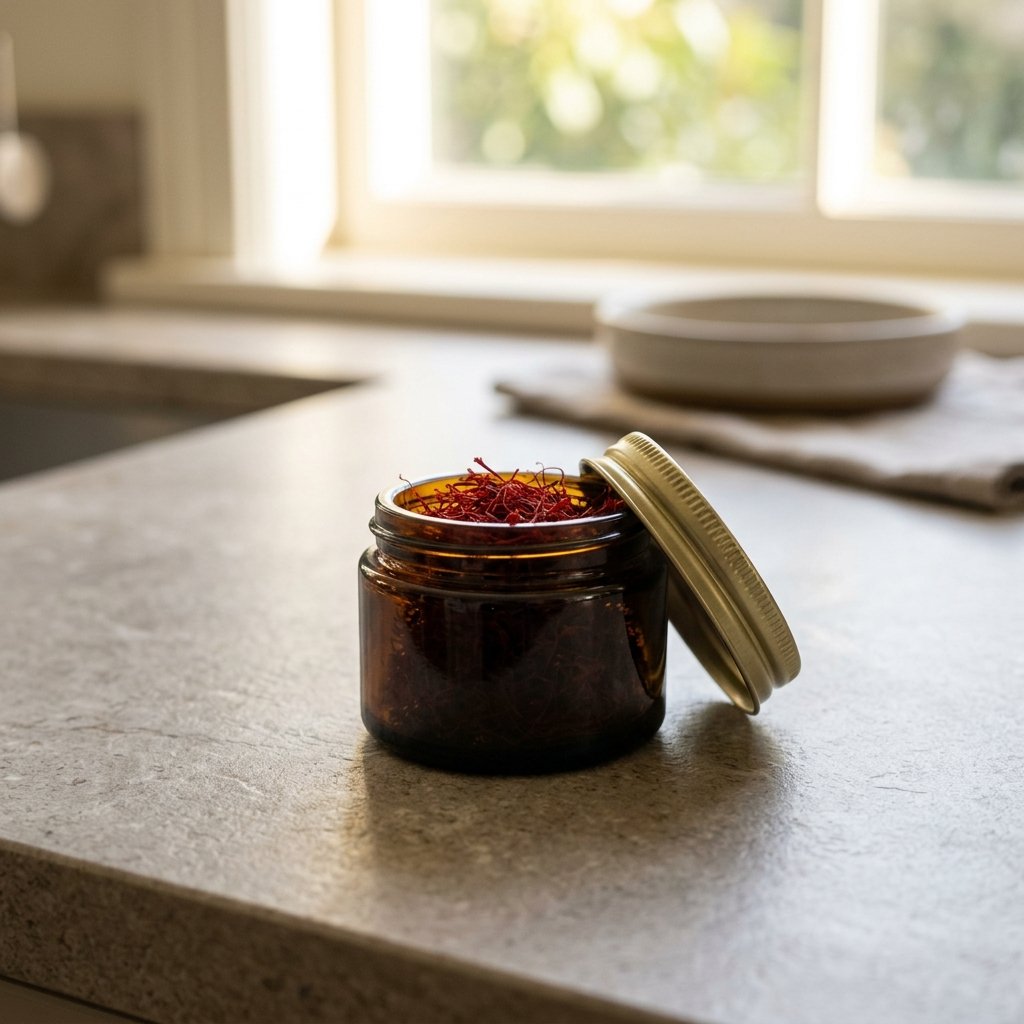
Saffron doesn't spoil the way fresh produce does, but it does gradually lose potency — typically around 10–15% of its strength per year even under good conditions.
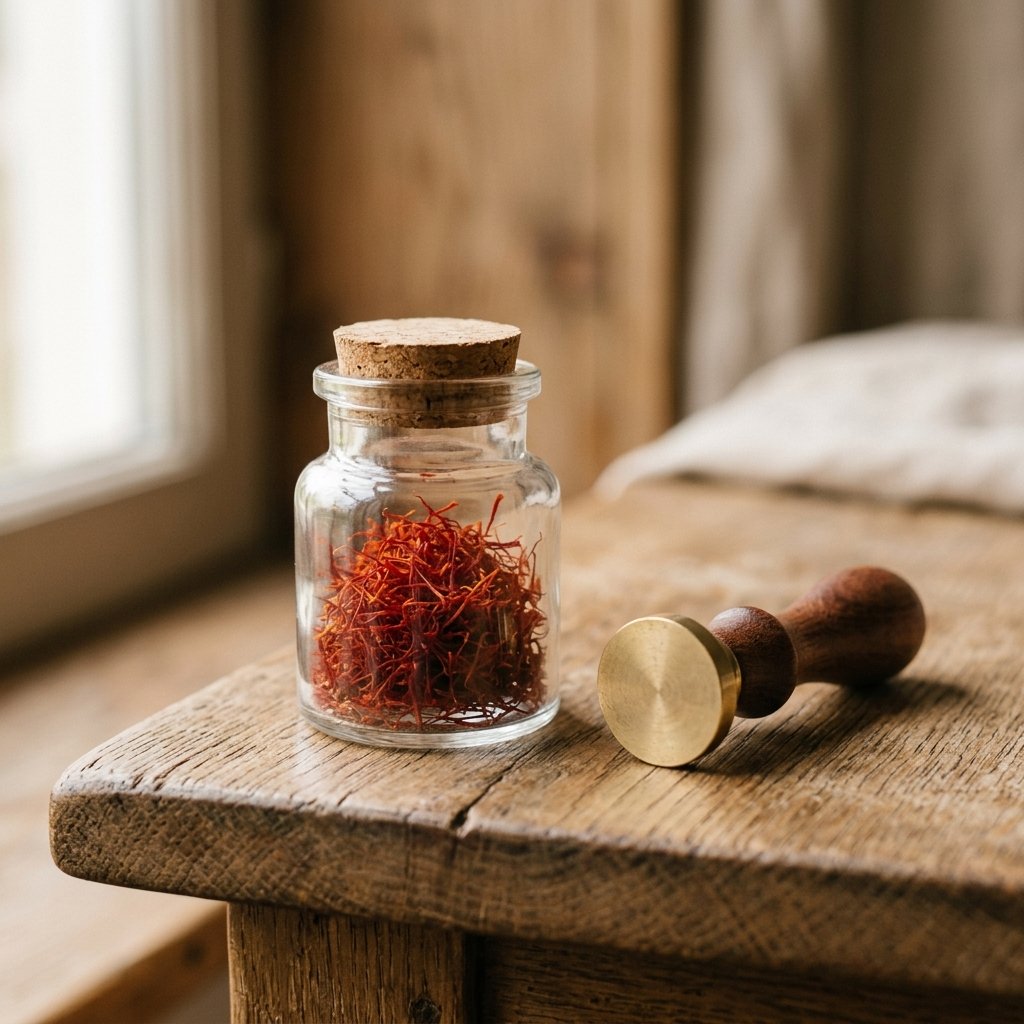
- Keep it away from light. UV exposure breaks down crocin and safranal fastest of any storage mistake. Use an opaque or dark glass container, never a clear jar left on an open shelf.
- Keep it airtight. Oxygen exposure degrades aroma compounds over time.
- Room temperature, not the fridge, in most cases. Repeatedly opening a refrigerated container introduces moisture through condensation, which can damage saffron faster than stable room-temperature storage. Only refrigerate if the container will stay sealed and largely undisturbed.
- Use within 12–18 months for best flavor and potency, though properly stored whole threads remain usable for 2–3 years. Ground or powdered saffron loses potency much faster — often within 6–12 months — so whole threads are almost always the better buy.
Kashmiri Saffron vs Iranian and Spanish Saffron
All three origins come from the same Crocus sativus species, but growing conditions create real differences worth knowing before you buy.
| Factor | Kashmiri | Iranian | Spanish |
|---|---|---|---|
| Typical crocin content | 8–12% | Varies widely, often 6–9% | Generally 6–8% |
| Global production share | Roughly 1–2% of world supply | The largest global producer by far | Smaller, historically prestigious grower |
| Color/aroma intensity | Very high, deep red | Moderate to high, varies by grade | Moderate |
| Typical price positioning | Premium to ultra-premium | Wide range, budget to premium | Premium (\"Spanish coupe\" grade especially) |
| GI protection | Yes (India, since 2020) | Regional protections vary | Denominación de Origen for La Mancha saffron |
Kashmiri saffron's low production volume — it makes up only a small fraction of global saffron output — is precisely why it commands premium pricing and why supply can be inconsistent year to year, especially after a poor harvest season.
Common Mistakes to Avoid
- Buying based on color alone. Dyed fakes can look more vividly red than genuine saffron. Color intensity alone isn't proof of authenticity — run the water test.
- Storing it in the fridge in a container you open daily. This introduces moisture and shortens shelf life.
- Over-boiling it. High heat for extended periods breaks down the delicate aroma compounds. Saffron should be gently bloomed in warm liquid, not boiled hard.
- Assuming more is better. Using large amounts doesn't multiply the benefit proportionally, and pushes you toward doses that carry real risk.
- Ignoring origin claims. \"Kashmiri\" on a label from a seller who can't answer where in Kashmir it was grown is a claim worth questioning, not accepting at face value.
Frequently Asked Questions
What makes Kashmiri saffron different from regular saffron?
Kashmiri saffron is grown exclusively in the Kashmir Valley's karewa soil at high altitude, which produces a notably higher concentration of crocin, safranal, and picrocrocin than saffron grown in most other regions. This translates to deeper color, stronger aroma, and a more pronounced flavor per thread.
How can I tell if my Kashmiri saffron is real?
Drop a few threads into lukewarm water or milk. Genuine saffron releases color gradually over a minute or more; fakes release color almost instantly. Combine this with checking the aroma, texture, and price against typical market rates.
Is Kashmiri saffron worth the high price?
For most buyers, yes, if used correctly — a small jar lasts months since the effective dose is only a few strands, and the potency difference compared to lower grades is genuinely noticeable in both flavor and color.
What is the difference between Mongra and Lacha saffron?
Mongra uses only the trimmed red stigma for maximum potency and is typically recommended for health and skincare use. Lacha includes a small portion of the attached yellow style, making it slightly less potent but more affordable for everyday cooking.
How many strands of saffron should I use per day?
Most people use 3–7 strands daily for culinary or wellness purposes. Doses above roughly 1.5 grams per day should be avoided without medical supervision.
Can pregnant women consume Kashmiri saffron?
Small culinary amounts are traditionally used in South Asian households during pregnancy, but higher doses can act as a uterine stimulant. Always consult a doctor before using saffron medicinally during pregnancy.
Does Kashmiri saffron help with sleep?
Traditional use pairs saffron with warm milk (kesar doodh) before bed, and the combination of milk's tryptophan with saffron's calming compounds is commonly cited as supportive for relaxation and sleep quality, though large-scale clinical evidence specifically for sleep is still limited.
How should I store saffron to keep it fresh?
Store it in an airtight, opaque container away from light and heat, ideally at room temperature. Avoid repeated refrigeration unless the container stays sealed, and use within 12–18 months for peak potency.
Why is Kashmiri saffron so expensive?
It takes roughly 150,000 hand-picked flowers to produce one kilogram of dried threads, and Kashmir's total saffron output is a small fraction of global production, making genuine supply naturally limited and labor-intensive.
What does the GI tag on Kashmiri saffron mean?
The Geographical Indication tag, granted in 2020, legally certifies that the saffron was actually grown in the designated Kashmir region, giving buyers a real standard to check against unverified origin claims.
Can I use Kashmiri saffron on my skin every day?
Small amounts in a diluted mask are generally considered safe for most skin types, but for face masks specifically, 2–3 times per week is commonly recommended to avoid over-exfoliation. Always patch-test first.
Does saffron interact with any medications?
Saffron may interact with blood-thinning medications and certain antidepressants due to its effect on serotonin activity. Anyone on prescription medication should check with a doctor before using saffron beyond small culinary amounts.
How long does a small jar of Kashmiri saffron last?
A 1-gram jar typically contains several hundred threads, and at a daily culinary dose of 3–7 strands, a single gram can realistically last one to two months of regular use.
What's the best way to use saffron in cooking?
Bloom the strands in a tablespoon of warm milk or water for 5–10 minutes before adding to your dish. This releases the color and aroma far more effectively than adding dry threads directly to a hot pan.
Is powdered saffron as good as whole threads?
Whole threads are generally the better buy — they're much harder to adulterate convincingly and retain potency roughly twice as long as powdered saffron, which tends to lose strength within 6–12 months.