Ask any home cook what separates a forgettable biryani from a genuinely great one, and saffron comes up almost every time — not because it's the dominant flavor, but because of what it does at the edges: those unmistakable golden streaks through the rice, the faint honeyed aroma that hits before the plate even reaches the table. Getting that effect right isn't complicated, but it does depend on one specific technique most recipes gloss over: blooming.
This guide walks through exactly how to bloom Kashmiri saffron for biryani, the right ratio to use, and where in the cooking process to add it for the best color and aroma.
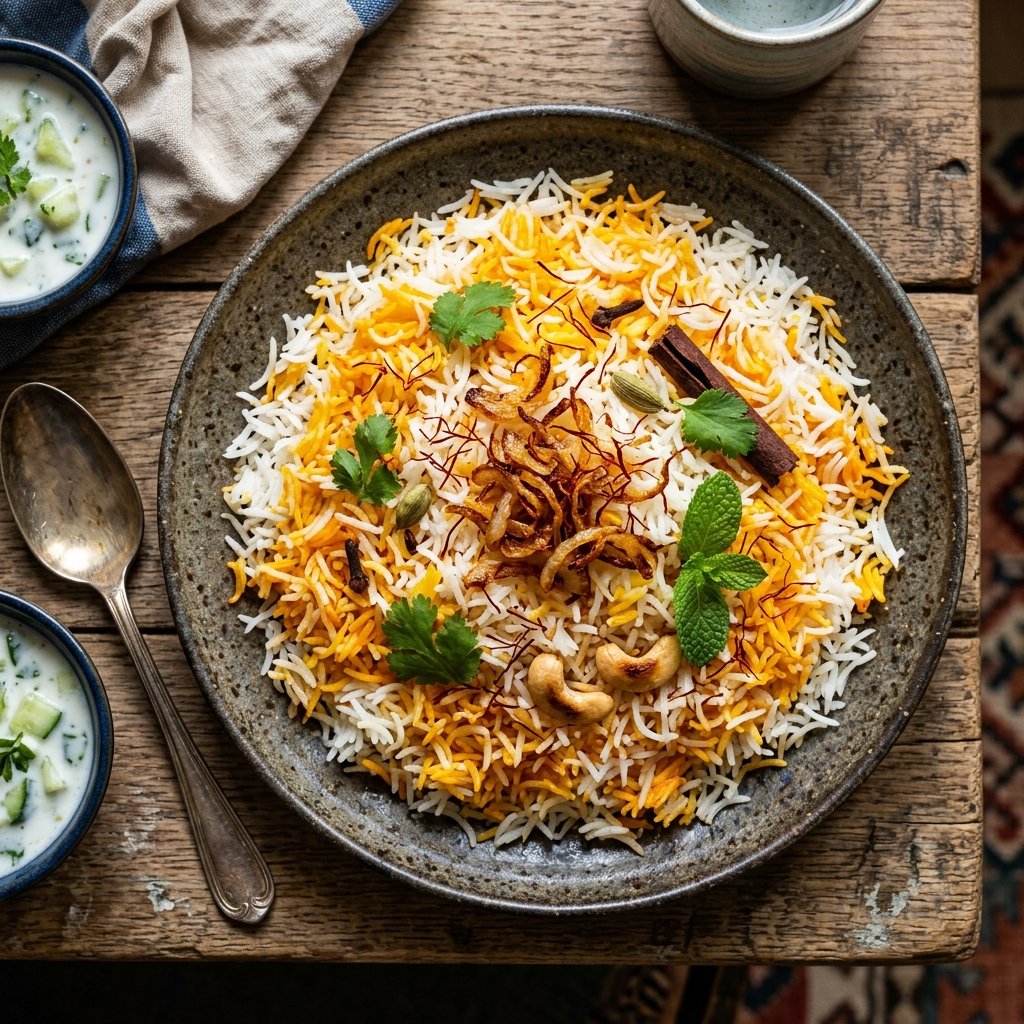
Properly bloomed saffron gives biryani its classic marbled golden streaks through the rice.
Why Blooming Saffron Matters
Saffron's color and aroma compounds — crocin and safranal — aren't fully released just by tossing dry threads into a hot pot of rice. They need a warm liquid to dissolve into first, a process called blooming. Skipping this step is the single biggest reason home biryani ends up with pale, uneven color and only a faint hint of saffron flavor despite using a reasonable amount of the spice.
How to Bloom Saffron for Biryani
- Warm a small amount of liquid. Two tablespoons of warm milk or water is enough for a standard biryani serving 4–6 people. It should be warm, not boiling — closer to bathwater temperature.
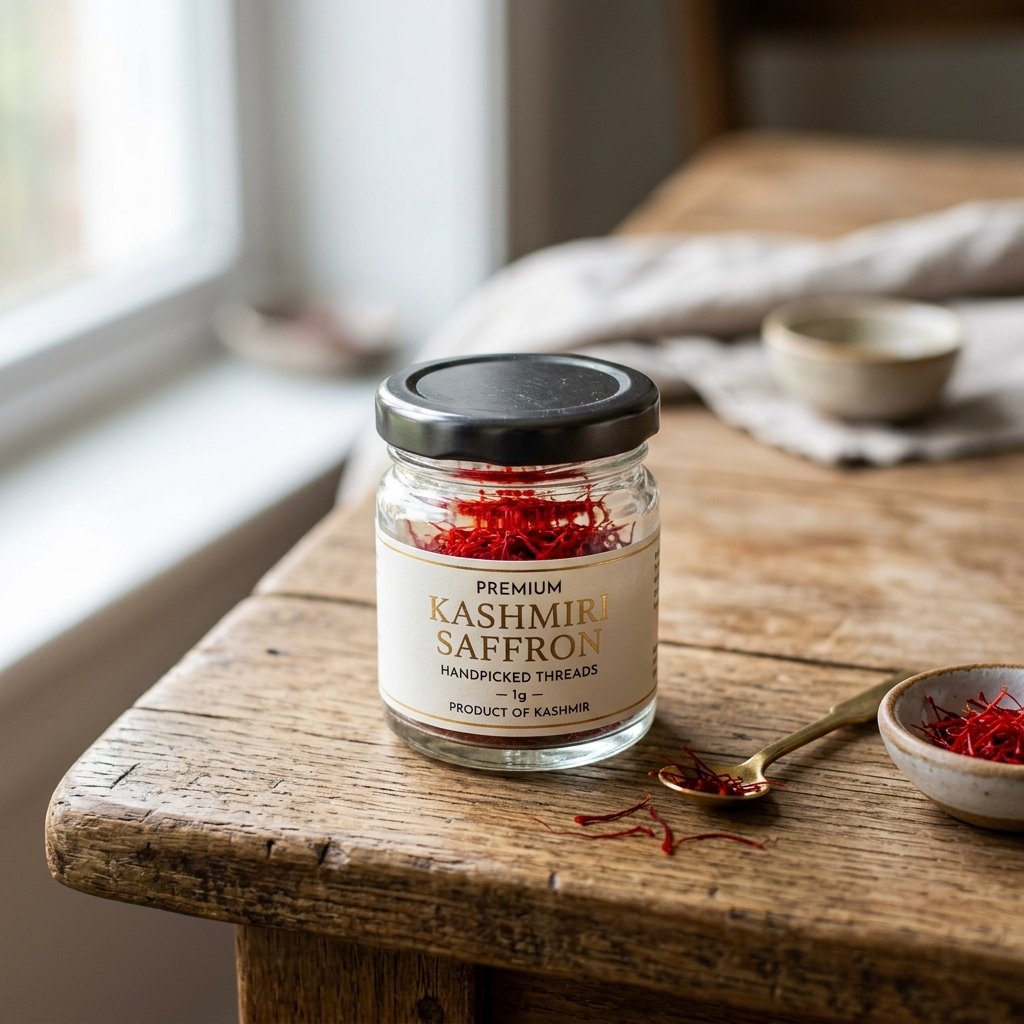
- Add your saffron strands. A pinch of 15–20 strands (roughly a generous quarter teaspoon) is the standard amount for a family-size batch. Crush the strands lightly between your fingers first to speed up the release.
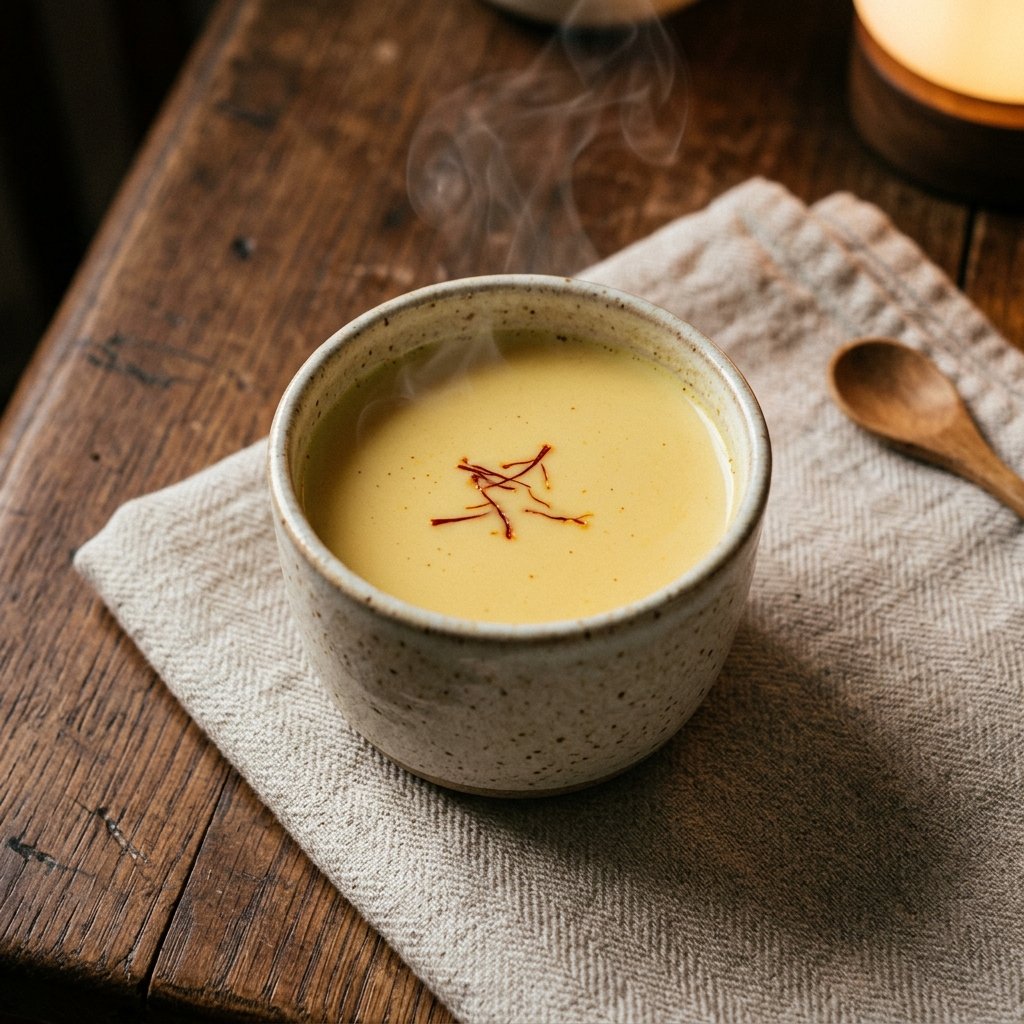
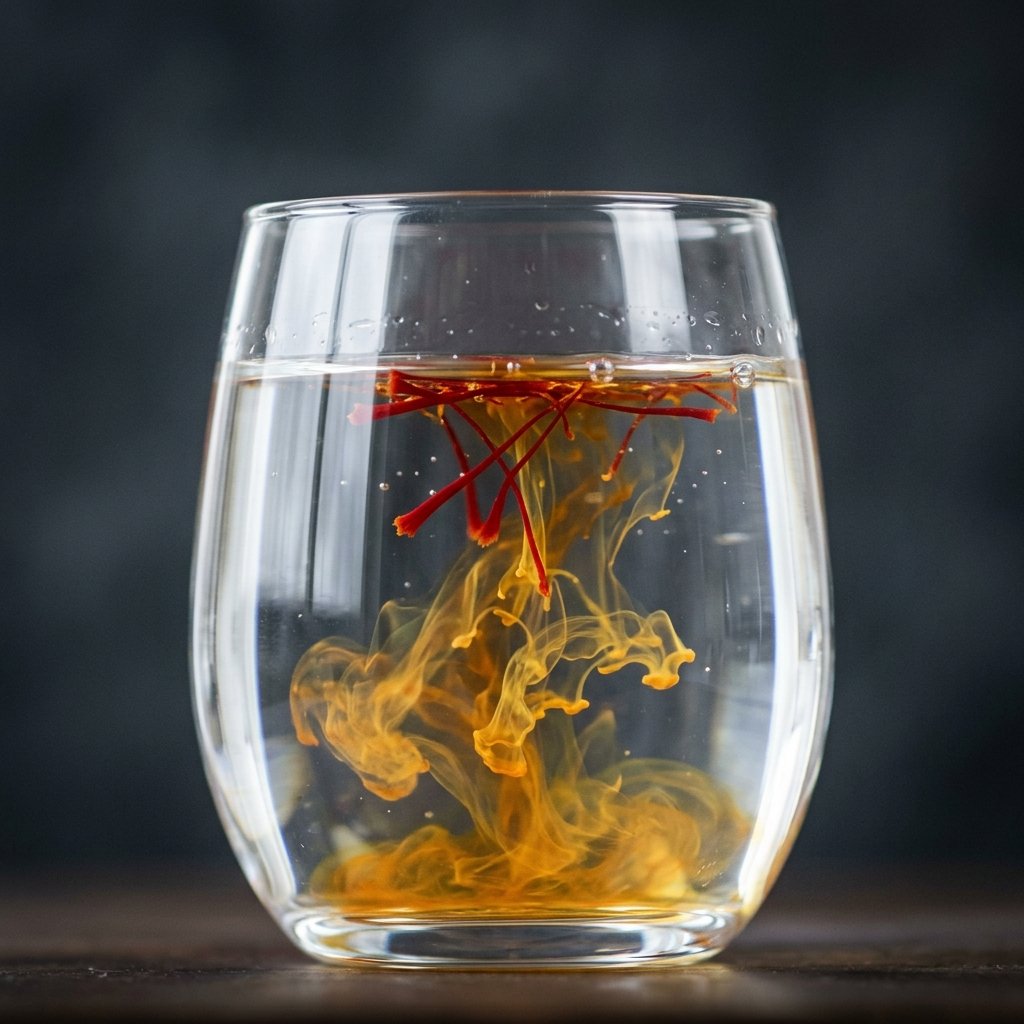
- Let it steep for 10–15 minutes. You'll see the liquid gradually deepen to a rich golden-orange color. This bloomed liquid is what actually goes into your biryani — not the dry threads.
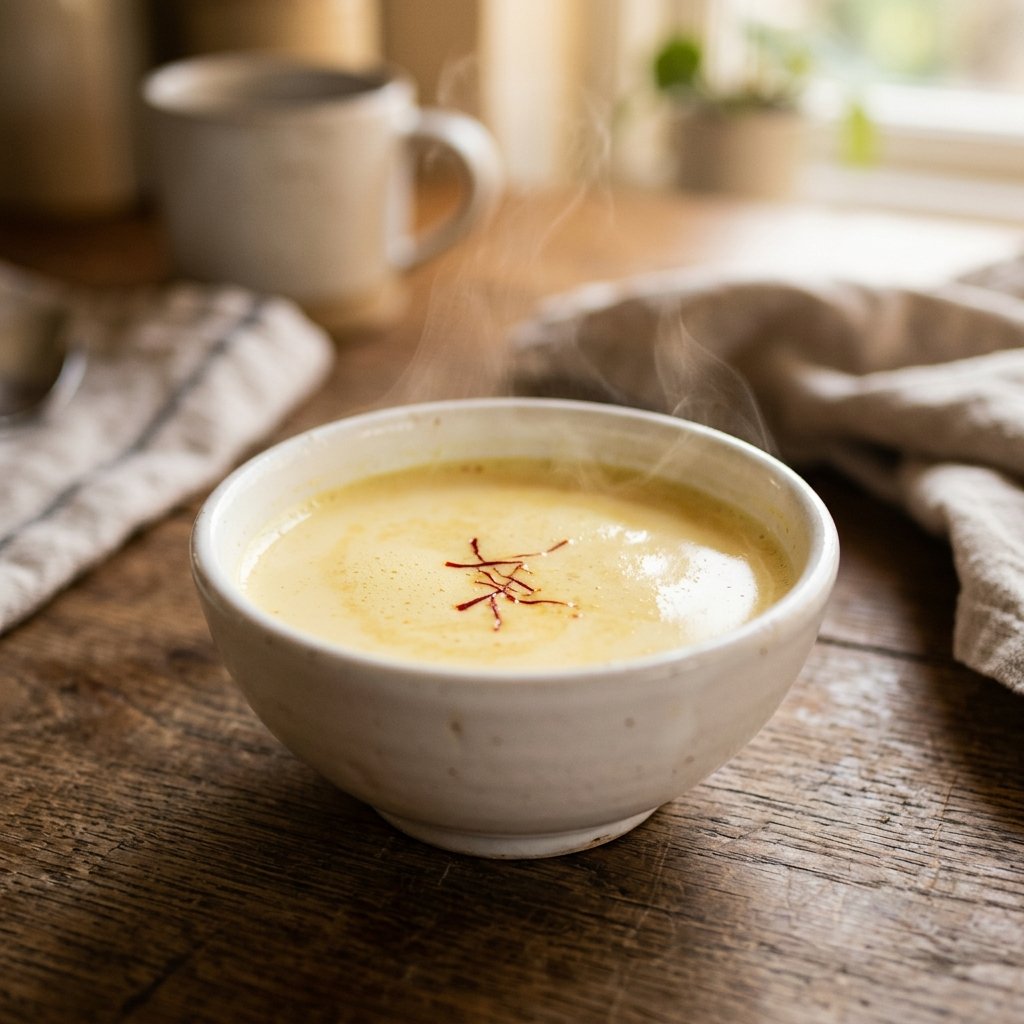
Blooming saffron in warm milk for 10-15 minutes releases its full color and aroma before adding to rice.
When to Add Bloomed Saffron to Biryani
Timing matters as much as the bloom itself. The most common and effective method is the dum layering technique: once your rice is roughly 70% cooked and your meat or vegetable base is ready, layer partially cooked rice over the base, then drizzle the bloomed saffron milk over the top layer in streaks rather than mixing it in evenly. This is exactly why classic biryani has those visible golden streaks running through the rice rather than a uniform pale-yellow color throughout — the streaking is intentional, not accidental.
Cover the pot tightly (traditionally sealed with dough around the lid edge, a technique called "dum") and let it steam on low heat for 20–25 minutes.
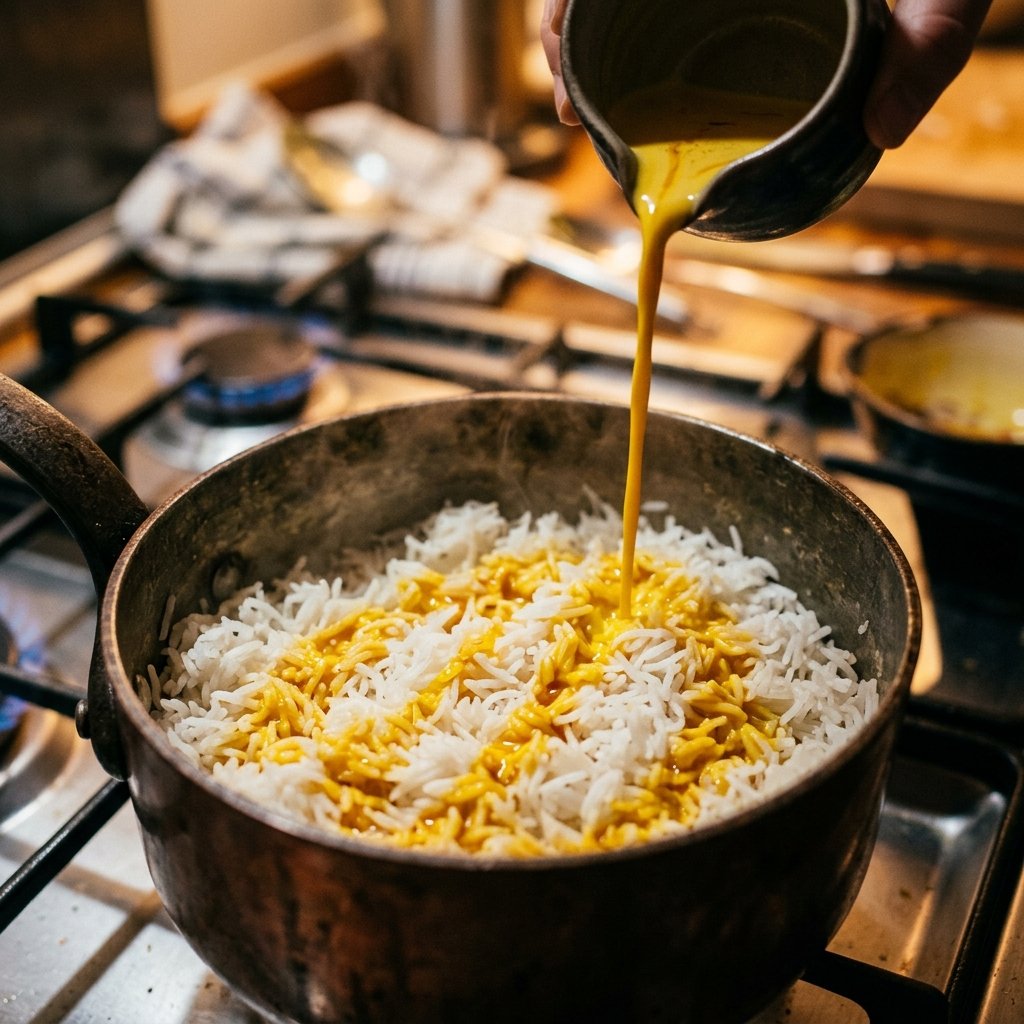
Drizzling bloomed saffron in streaks, rather than mixing evenly, creates biryani's signature marbled look.
Kashmiri Saffron Biryani: Basic Ratios
For a biryani serving 4–6 people:
- 15–20 strands Kashmiri saffron
- 2 tablespoons warm milk (for blooming)
- 3 cups basmati rice
- Your choice of meat, vegetable, or paneer base, prepared separately
This ratio gives noticeable color and aroma without overwhelming the dish — saffron in biryani should complement the spices already in the base, not compete with them.
Common Mistakes That Weaken Saffron's Impact
- Adding dry threads directly to hot rice. Without blooming first, most of the color and aroma simply never releases properly.
- Mixing bloomed saffron in evenly instead of streaking it. This gives a flat, uniform pale color instead of the classic marbled look.
- Using too little saffron and compensating with yellow food coloring. This is a common shortcut in lower-quality restaurant biryani — it fakes the color without any of saffron's actual aroma or flavor.
- Over-blooming for too long at high heat. If your blooming liquid is simmered rather than gently warmed, you risk degrading safranal before it even reaches the rice.
A Note on Saffron Quality for Cooking
For biryani specifically, Lacha grade Kashmiri saffron is a perfectly good, more economical choice compared to premium Mongra — the slight difference in potency between grades matters far more for medicinal or skincare use than it does in a dish with this many competing flavors and spices. Save Mongra for kesar doodh or situations where saffron is the star rather than a supporting note. You can buy Kashmiri saffron online from a trusted source.
Frequently Asked Questions
How much saffron should I use for biryani?
Roughly 15–20 strands (about a generous quarter teaspoon) is standard for a biryani serving 4–6 people, bloomed in 2 tablespoons of warm milk or water before adding.
Why do I need to bloom saffron before adding it to rice?
Blooming dissolves saffron's color and aroma compounds into a liquid first. Adding dry threads directly to hot rice releases far less color and flavor than properly bloomed saffron.
Should I bloom saffron in milk or water?
Either works, though milk is traditionally preferred for biryani since its fat content helps extract saffron's compounds slightly more fully.
Why does restaurant biryani sometimes look more yellow than golden?
This is often a sign of yellow food coloring being used instead of, or alongside, real saffron.
Can I use Lacha grade saffron for biryani instead of Mongra?
Yes, and it's actually the more practical choice for cooking. Lacha's slightly lower potency compared to Mongra is barely noticeable in a dish with many other spices, and it's more economical for regular use.
What's the dum technique in biryani?
Dum refers to slow steaming a tightly sealed pot of layered rice and meat or vegetables on low heat, traditionally with dough sealing the lid edge.
Can I make saffron biryani without dairy?
Yes — bloom the saffron in warm water instead of milk. The color extraction is slightly less rich, but the aroma and flavor release work in largely the same way.
Explore More Himalayan Superfoods: Pair your wellness routine with lab-tested pure Himalayan Shilajit sourced directly from high-altitude rock faces.