If you've spent any time comparing shilajit online, you've probably noticed the same problem everywhere: five sellers, five different textures, five different prices, and every single one calling itself "pure Himalayan Shilajit." That's not an accident.
Shilajit is one of the most adulterated wellness products sold in India today, and most buyers have no way to check what they're actually getting.
This page exists to fix that. Below, you'll find what shilajit actually is, how it forms, and what genuine purified shilajit should look and taste like.
You'll also learn how to use it, and how to tell real resin from the tar-like fakes flooding online marketplaces. Once you know what to look for, choosing the right one becomes a lot less confusing.
What is Shilajit
Shilajit is a thick, mineral-rich substance that seeps out of rock layers high in the Himalayas, Karakoram, and a few other mountain ranges. It forms over centuries as plant matter gets compressed, decomposed, and mineralised under enormous pressure.
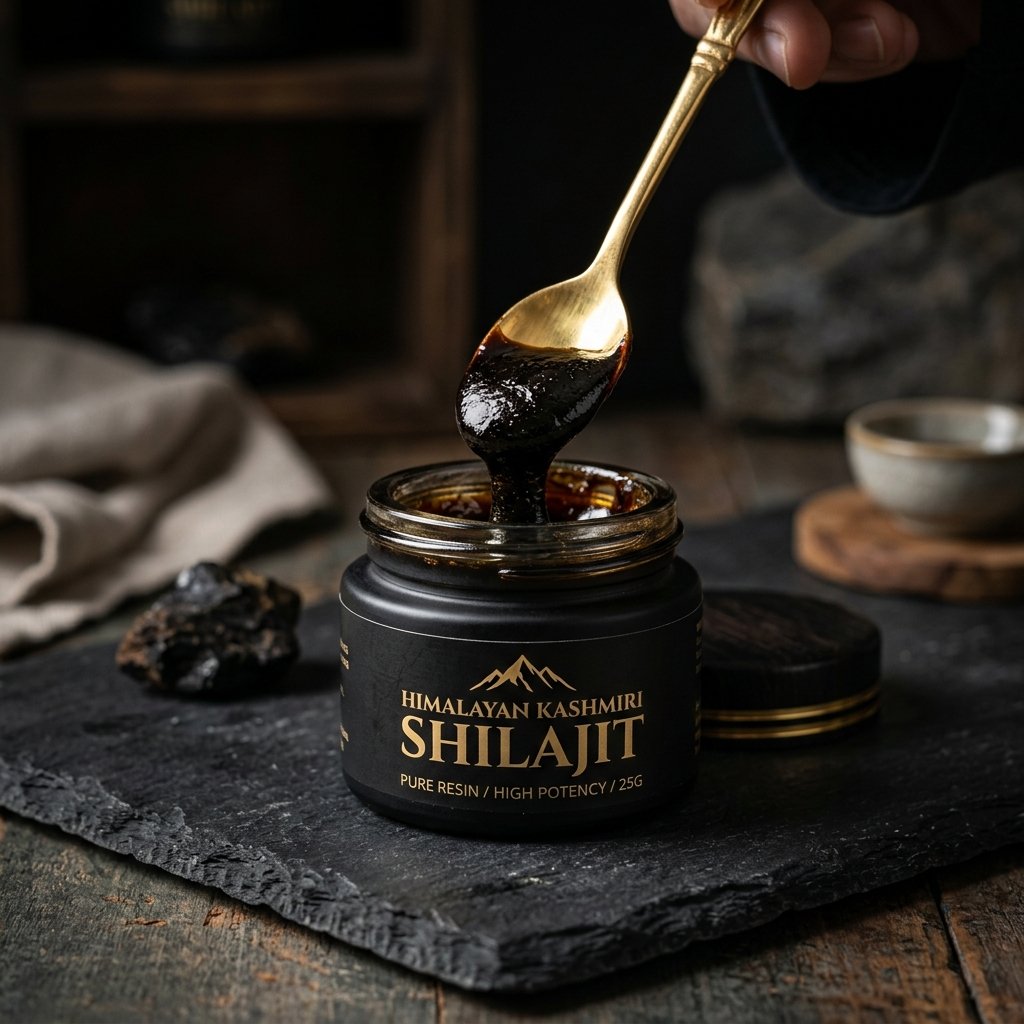
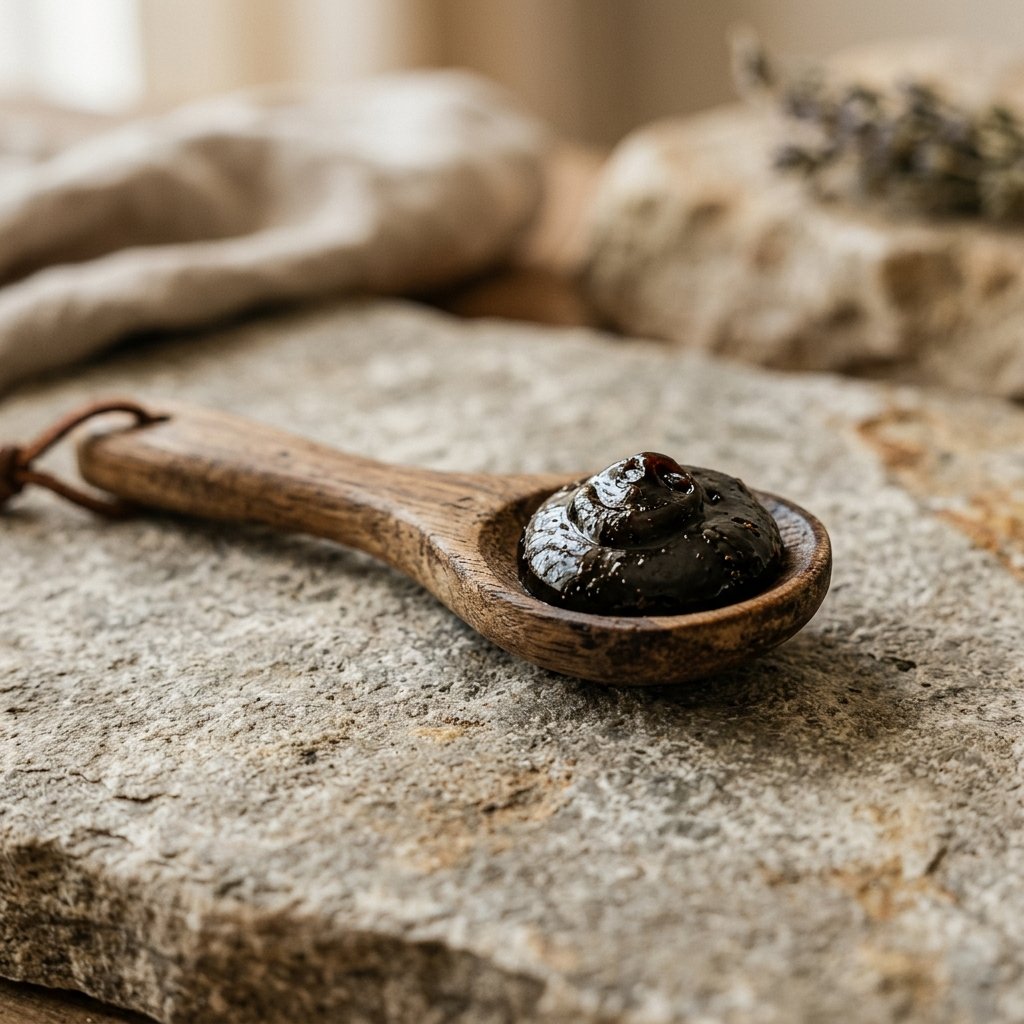
In its raw state, it oozes out of cracks in south-facing rock faces during the warmer months, usually a dark brown to blackish-brown resin with a strong, tar-like smell.
In Ayurveda, shilajit is classified as a rasayana, a substance traditionally used to support strength, stamina, and overall vitality. It's been documented in Ayurvedic texts for over a thousand years, referenced alongside other rasayana herbs like ashwagandha and safed musli.
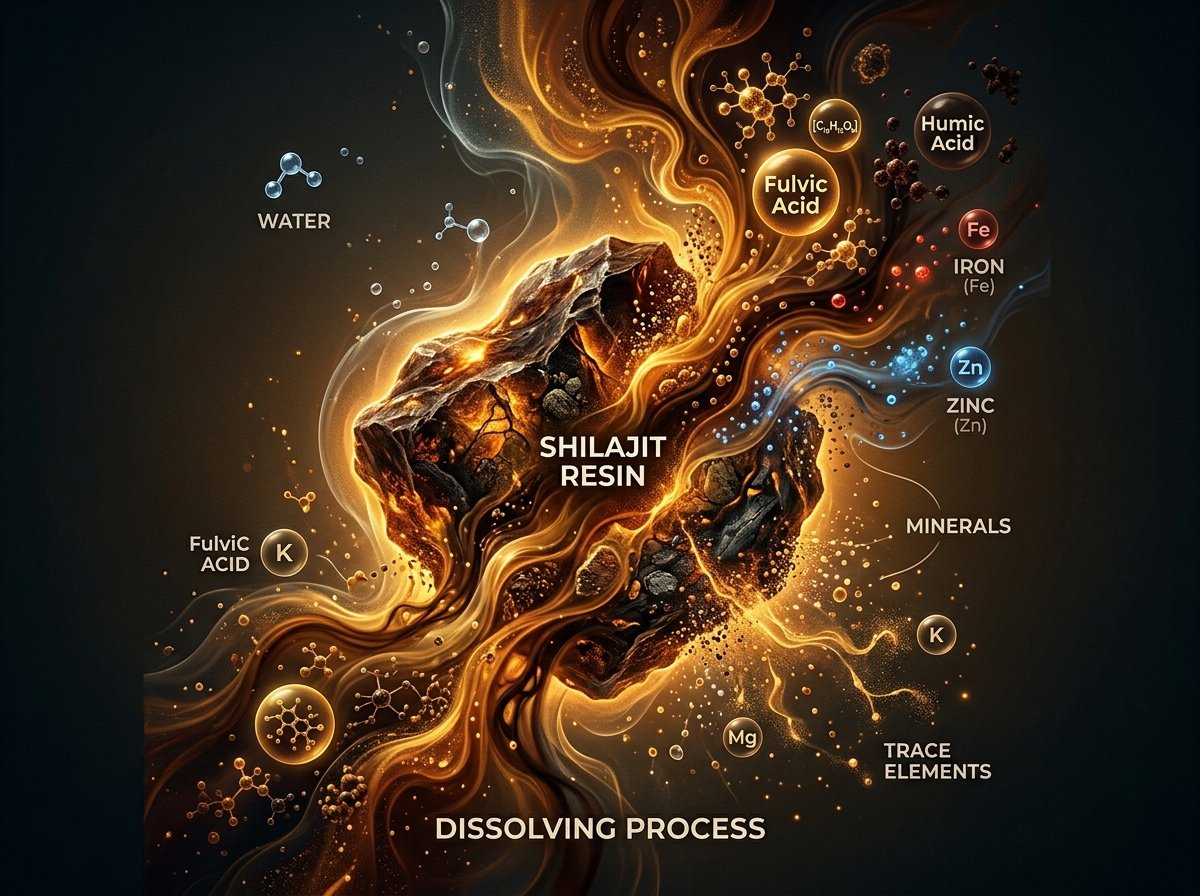
What actually makes shilajit valuable isn't folklore, it's composition. Purified shilajit contains fulvic acid as its primary active compound, along with humic acid and a wide mineral profile including iron, zinc, copper, and trace elements picked up from the rock it forms in.
Fulvic acid is what researchers point to most often when studying shilajit's role as a carrier compound, helping the body absorb some of those minerals more efficiently.
The name itself varies by region, which is part of why buyers searching for this product online use so many different terms. In Hindi, it's simply shilajit, sometimes written shilajeet.
In Tamil, it's referred to as mala kanikam or shilajit in transliteration; in Telugu, silajathu; in Kannada, shilajathu; and in Marathi, the Hindi term is generally used directly.
Outside India, Central Asian traditions call the same substance mumiyo or mumijo, while some English-language sources use the term "mineral pitch," a fairly literal description of what it looks like when you first see it. All of these names point to the same underlying substance, so if you've seen one and not the other, you haven't found a different product, just a different regional word for it.
Historically, shilajit's use goes back further than most Ayurvedic rasayanas that are commonly discussed today. Descriptions of a rock-derived exudate used for strength and vitality appear in classical Ayurvedic texts including the Charaka Samhita, one of the foundational texts of Ayurvedic medicine, dated to roughly the first few centuries BCE to CE.
It's also referenced in Tibetan and Unani medical traditions under their own regional names, which suggests the practice of collecting and using this substance developed independently across several Himalayan and Central Asian cultures rather than spreading from a single source.
Where Himalayan Shilajit comes from
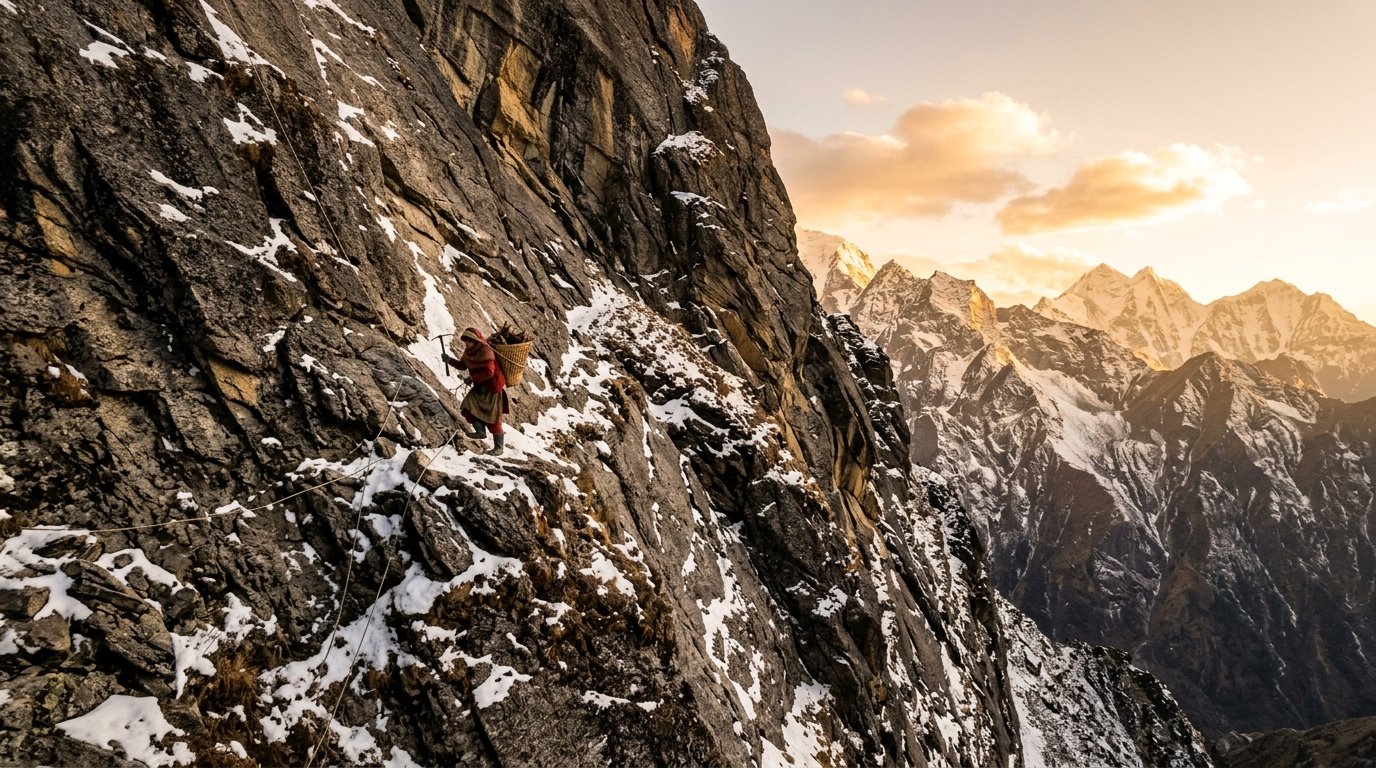
High-altitude rock faces above 16,000 feet in the Himalayas where shilajit is hand-harvested.
Not all shilajit is equal, and geography is a big part of why. The purest, most mineral-dense shilajit tends to come from high-altitude regions, typically above 16,000 feet, where extreme pressure and temperature cycles concentrate the resin over long periods.
The Himalayan belt stretching through Ladakh, Himachal Pradesh, and parts of the Kashmir Valley produces some of the most sought-after raw shilajit in the world, alongside similar deposits in the Karakoram range and parts of Central Asia.
Altitude matters here in a very literal sense: shilajit collected from lower elevations is typically thinner, less concentrated, and carries a weaker mineral profile than resin pulled from rock faces well above the tree line.
Collection still happens largely by hand. Local harvesters identify seepage points on exposed rock during summer, when the resin softens enough to scrape off safely, then transport it down for processing.
This is slow, seasonal work, which is part of why genuinely high-altitude shilajit costs more than the diluted versions sold at rock-bottom prices online.
Geologically, the process behind shilajit's formation takes an extraordinarily long time. Layers of plant and microbial matter get trapped between rock strata, then subjected to repeated pressure and temperature cycles over what researchers estimate can be centuries.
Over that time, the organic material breaks down into a dense, mineral-infused mass, and as summer heat softens the surrounding rock each year, small amounts seep out through cracks and fissures.
This is also why supply is naturally limited and can't simply be scaled up the way a manufactured supplement can. A mountain either has active seepage points that season or it doesn't, and no amount of demand changes that timeline.
Weather and altitude both affect how much shilajit is available in a given year. A shorter or cooler summer season means fewer weeks where the resin softens enough to collect, which is part of why sourcing costs and availability shift somewhat year to year, similar to any other harvest-dependent product from the region.
Is your shilajit actually purified
Raw shilajit straight off a mountainside isn't something you should consume. It can carry heavy metals, fungal spores, free radicals, and organic debris picked up during formation, and needs to go through a purification process before it's safe.
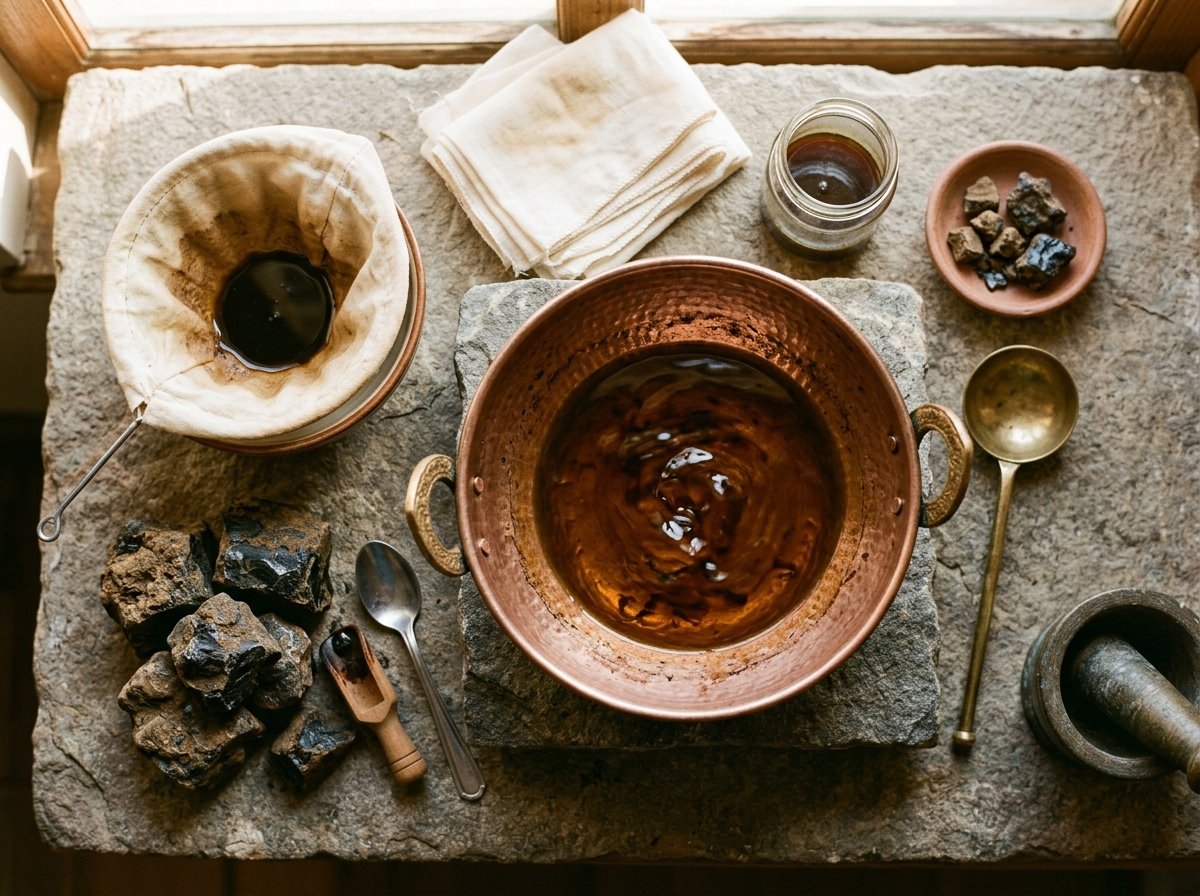
Traditional purification, called shodhana in Ayurveda, involves dissolving raw shilajit in water, filtering it repeatedly to remove insoluble impurities, then reducing it slowly over low heat until it reaches a semi-solid, resin-like consistency again. Done properly, this process also concentrates the fulvic acid content rather than diluting it.
Shodhana purification: Multi-stage water dissolution, filtering, and reduction over low heat.
This is the single biggest quality gap between sellers. Some skip proper purification entirely and sell lightly filtered raw material at premium prices.
Others dilute purified shilajit with fillers, binders, or even coal tar derivatives to stretch supply and cut cost, something that's become common enough that Indian health authorities have issued public warnings about adulterated shilajit sold as "pure Himalayan resin."
A batch that's genuinely purified and lab-tested for heavy metals is worth paying more for, and worth asking your seller about directly if that information isn't already on the label.
What affects the price of Shilajit
Shilajit prices vary more than most Ayurvedic products, and understanding why helps explain what you're actually paying for.
Purification quality
Proper shodhana purification is labour-intensive and reduces the raw material significantly by weight, since impurities, water content, and insoluble debris are all filtered out over multiple cycles. A seller who skips steps or dilutes the final product can undercut properly purified shilajit on price, which is exactly why the cheapest option in a search result is rarely the best one.
Altitude and source
Resin collected above 16,000 feet, from harder-to-reach seepage points, typically carries a higher raw material cost than lower-altitude sourcing. This is partly because of the labour involved in reaching it, and partly because higher-altitude resin tends to have a denser mineral and fulvic acid profile.
Harvest volume that year
Shifts prices the same way it does with any seasonal, hand-collected product. A shorter collection window because of weather means less raw material entering the supply chain, which pushes prices up the following season.
Format
Accounts for a smaller difference. Resin sold loose is typically the most cost-efficient per gram, while liquid extract carries a small amount of additional processing and bottling cost on top of the raw material.
As a rough guide, genuinely purified Himalayan shilajit in India tends to sit well above the price of the heavily diluted "mineral pitch" sold on general marketplaces at very low per-gram rates. If a price looks dramatically lower than everything else you've seen for a comparable weight and grade, that's usually a purity question, not a bargain.
Shilajit benefits
Most of what shilajit is used for in Ayurvedic practice comes down to a handful of consistent themes, supported by both traditional use and a growing body of smaller clinical studies.
⚡ Energy and stamina
Shilajit is traditionally used to support natural energy levels, largely attributed to its role in supporting mitochondrial function, the part of the cell responsible for producing energy. Regular users often describe steadier energy through the day rather than the sharp spike-and-crash pattern associated with caffeine.
🧠 Cognitive support
Fulvic acid has antioxidant properties, and shilajit has a long traditional history of use for supporting mental clarity and focus, particularly in older adults.
🏋️ Physical performance and recovery
Because of its mineral density, particularly iron and zinc, shilajit is commonly used by people who train regularly, as part of a broader approach to recovery and stamina alongside proper diet and rest.
🛡️ Immune and general wellness support
The trace mineral profile in purified shilajit, along with its antioxidant compounds, is part of why it's positioned in Ayurveda as a broad rasayana rather than a single-purpose remedy.
✨ Skin support
Shilajit's antioxidant and mineral content has led to its growing use in Ayurvedic skincare, typically applied topically rather than consumed, where it's associated with supporting skin's natural resilience against everyday environmental stress. This is a newer, less-studied use compared to its traditional internal applications, so treat it as a complementary use rather than a primary reason to buy.
💪 Exercise recovery & physical stamina
Athletes and regular gym-goers are one of the fastest-growing groups of shilajit users, largely because of its traditional association with stamina and its practical mineral content. Iron and zinc both play roles in normal energy metabolism and muscle function, which is part of why shilajit is often used alongside, not instead of, a solid training and nutrition routine rather than as a standalone performance enhancer.
Important Health Note: It's worth being upfront here: shilajit is a traditional wellness supplement, not a medical treatment, and none of the above should be read as a claim to cure, treat, or prevent any disease. If you're managing a health condition or taking medication, it's worth checking with a doctor before adding it to your routine.
Shilajit benefits for men
A large share of shilajit search interest specifically concerns male vitality, so it's worth addressing directly, without overstating what the evidence actually shows.
Shilajit is traditionally associated with supporting male reproductive health and stamina in Ayurvedic practice, and some smaller studies have looked at its relationship with testosterone levels and sperm parameters in adult men, generally over supplementation periods of 90 days or longer.
The mineral and fulvic acid content is thought to play a supporting role here, alongside its broader effect on energy and recovery.
For men who train or work physically demanding jobs, the appeal is usually less about a single dramatic effect and more about the cumulative pattern: steadier energy, better recovery between workouts, and support for the kind of daily stamina that's hard to isolate in a lab but easy to notice in practice.
Shilajit benefits for women
Shilajit isn't gender-specific in its traditional use, and there's no Ayurvedic basis for treating it as a men-only supplement, despite how it's often marketed.
For women, shilajit is traditionally used to support energy levels, particularly during periods of fatigue, and for its mineral content, since iron and other trace minerals matter for many women's daily nutritional needs.
Its antioxidant properties are also relevant to skin and general wellness use, which is part of why you'll find shilajit increasingly included in Ayurvedic skincare formulations.
Precaution: One caution worth flagging clearly: pregnant or breastfeeding women should not take shilajit without first consulting a doctor. There isn't enough safety research in this specific population to make a blanket recommendation either way, so this is a genuine "check with a professional first" situation rather than a marketing caveat.
Shilajit resin vs liquid extract: which form to choose
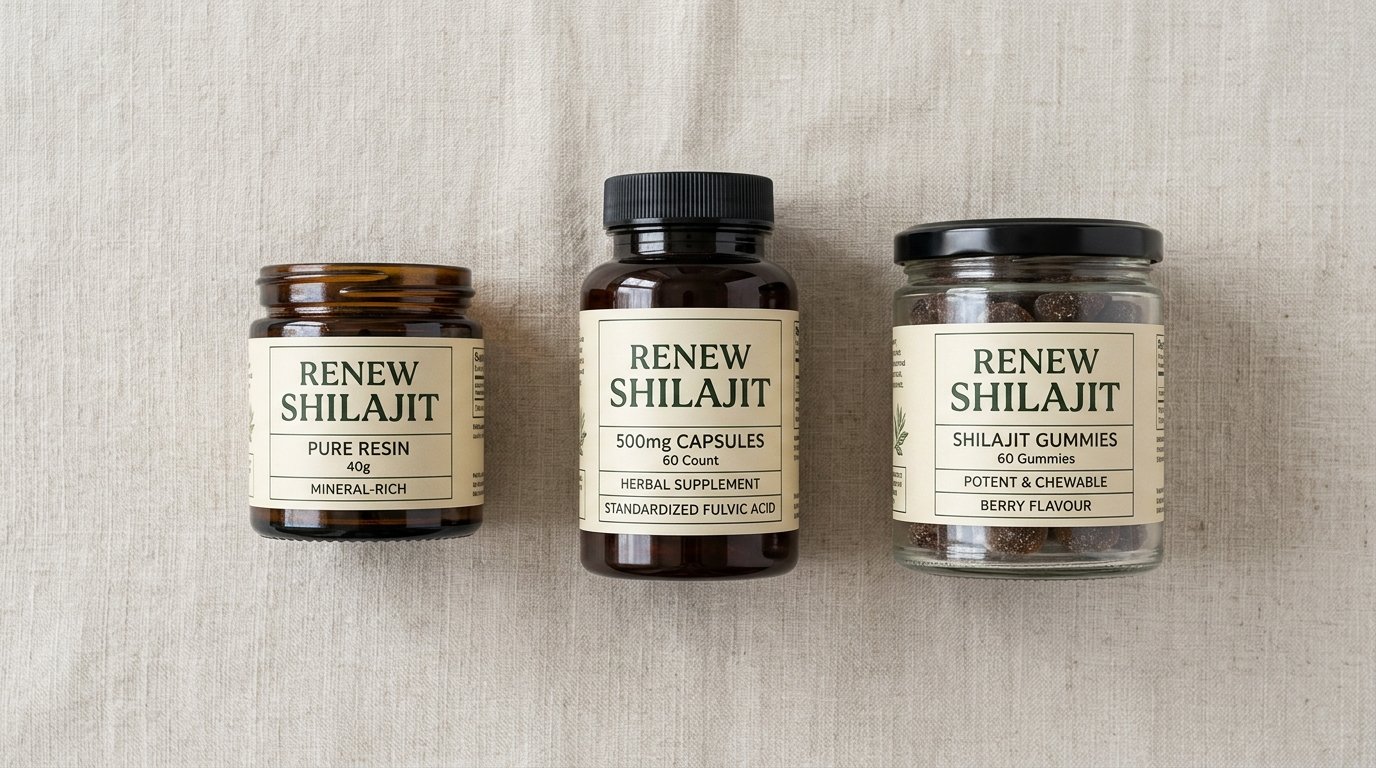
Shilajit is sold here in two forms, and each suits a slightly different kind of buyer. This page covers them briefly; each form has its own dedicated product page with full details.
🏆 Pure Shilajit Resin
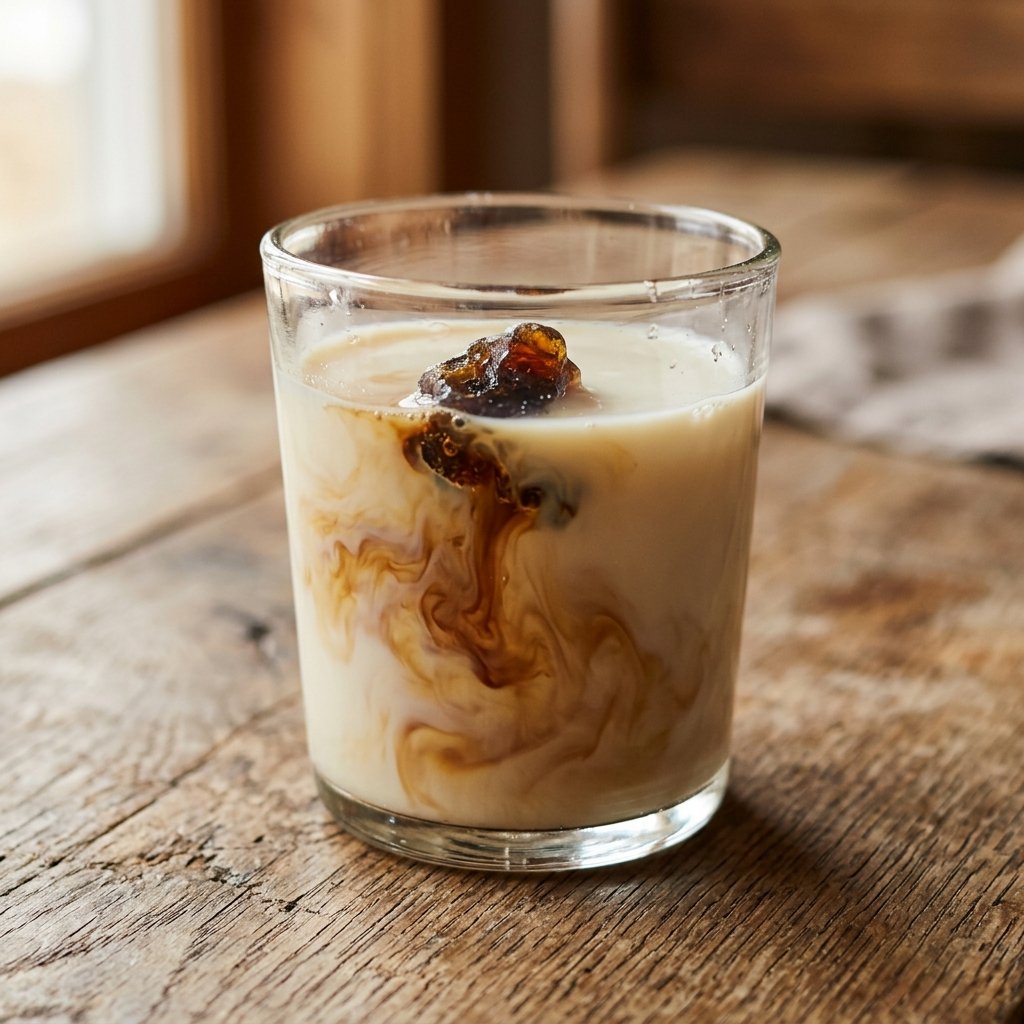
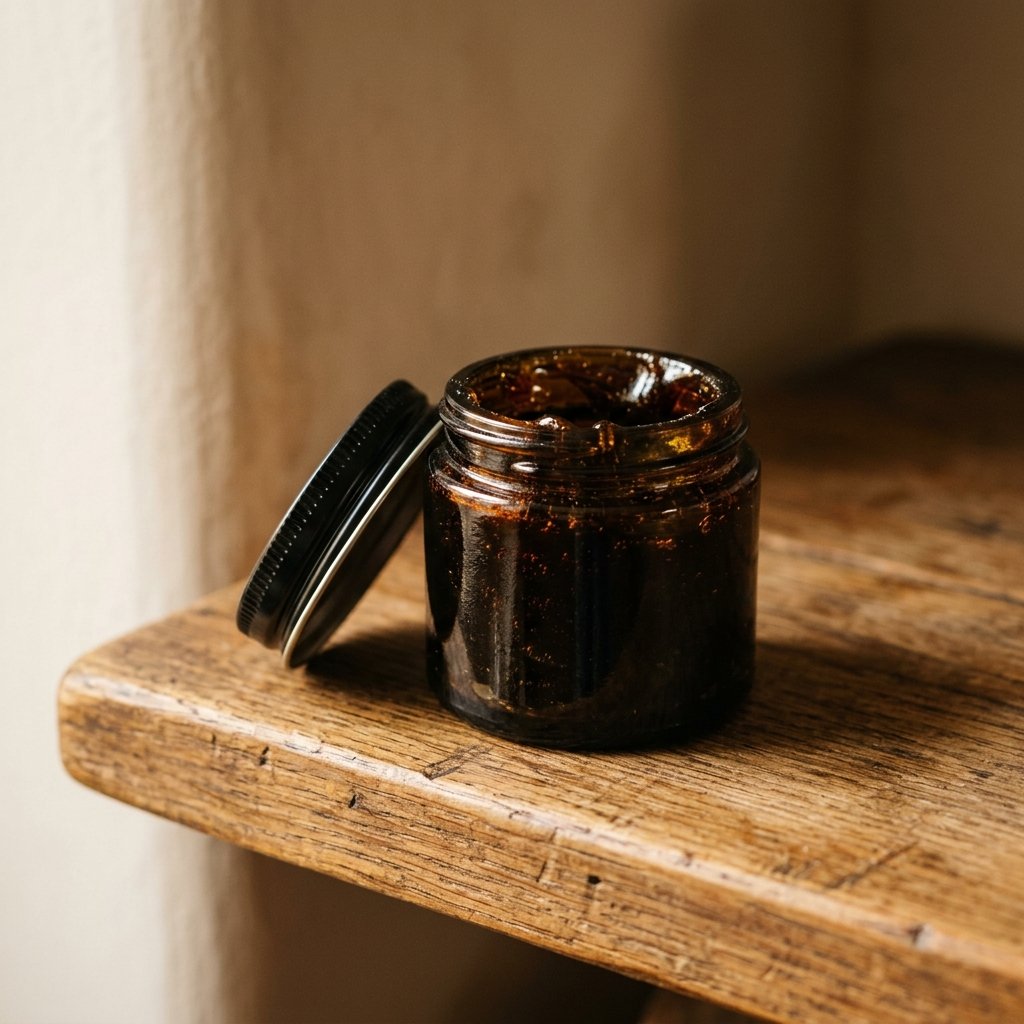
Resin is the most traditional and typically most concentrated form, dissolved in warm water or milk before drinking. It requires the least processing between harvest and your hands, which is why purists tend to prefer it.
💧 Shilajit Liquid Extract
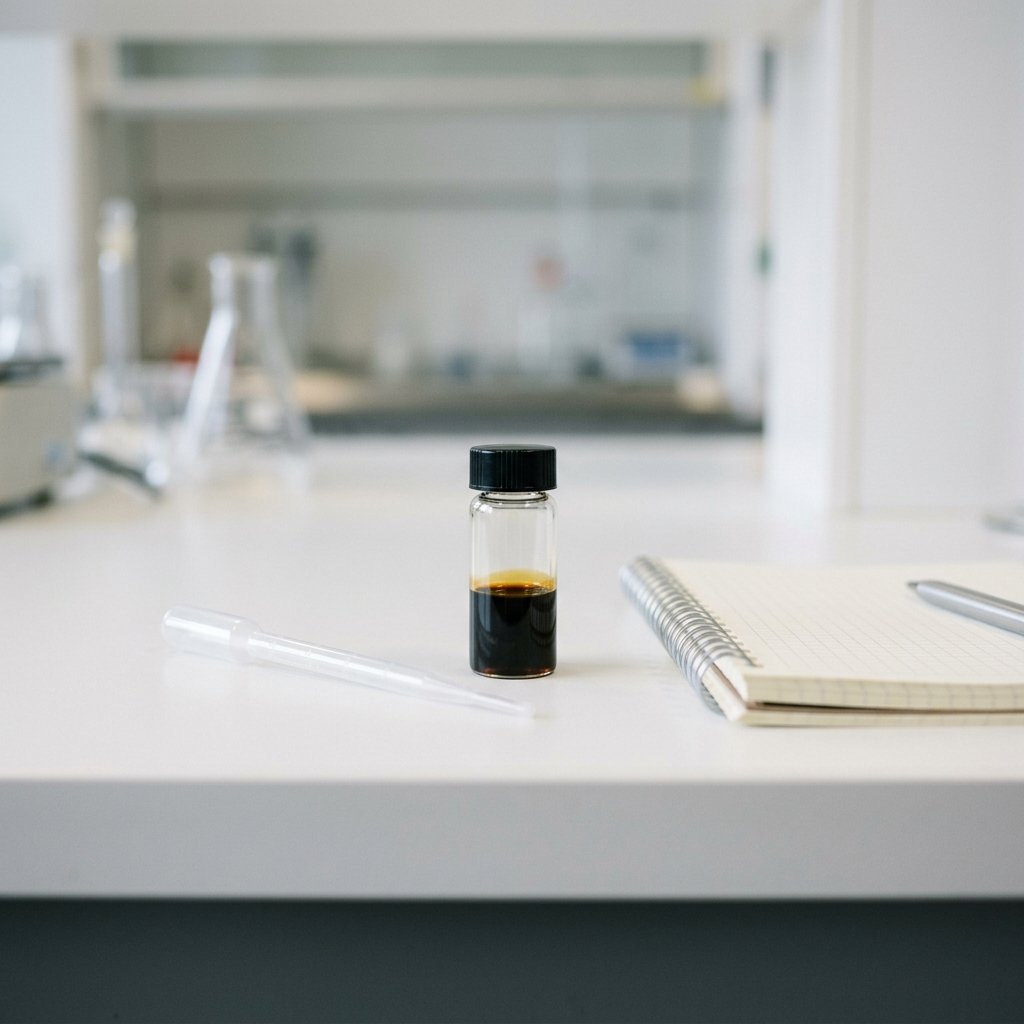
Liquid extract is resin that's already been dissolved and pre-measured into a dropper bottle, so there's no pinching off a piece or waiting for it to dissolve. It's a straightforward option if you want the same purified resin but with easier, more precise daily dosing.
Whichever format you choose, the purification standard matters more than the format itself. A well-purified liquid extract will always outperform a poorly purified, diluted resin.
What's inside genuine Shilajit
Fulvic acid is the compound most associated with shilajit's effects, typically making up somewhere between 15% and 20% of a well-purified sample by weight, though this varies by source and processing method.
Alongside it, humic acid contributes additional antioxidant activity, and the mineral spectrum, which can include iron, zinc, copper, magnesium, and dozens of trace elements, rounds out the profile.
A genuine, well-processed shilajit product should be transparent about at least two things: a lab report confirming heavy metal levels are within safe limits, and some indication of fulvic acid content. If neither is available on request, that's worth treating as a gap, not a formality.
How to identify real Shilajit
Because fake and heavily diluted shilajit is so common, it helps to know a few practical checks you can run yourself.
1
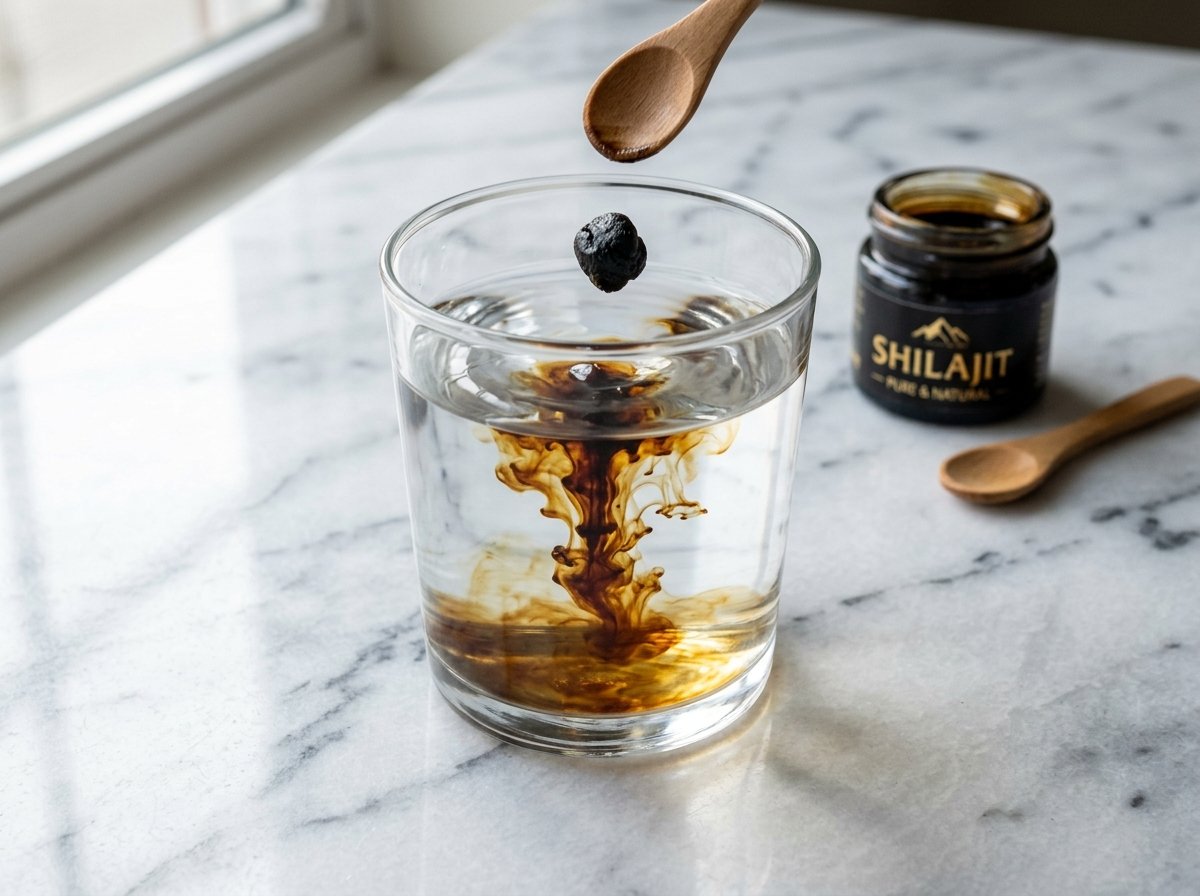
The Water Test
Drop a small piece of resin into a glass of room-temperature water. Genuine shilajit softens slowly and starts to dissolve without forming a hard clump or sinking as a solid lump. Poor-quality or fake versions often either dissolve too fast, a sign of added fillers, or refuse to soften at all, a sign it's closer to tar or asphalt than resin.
2
Texture & Smell
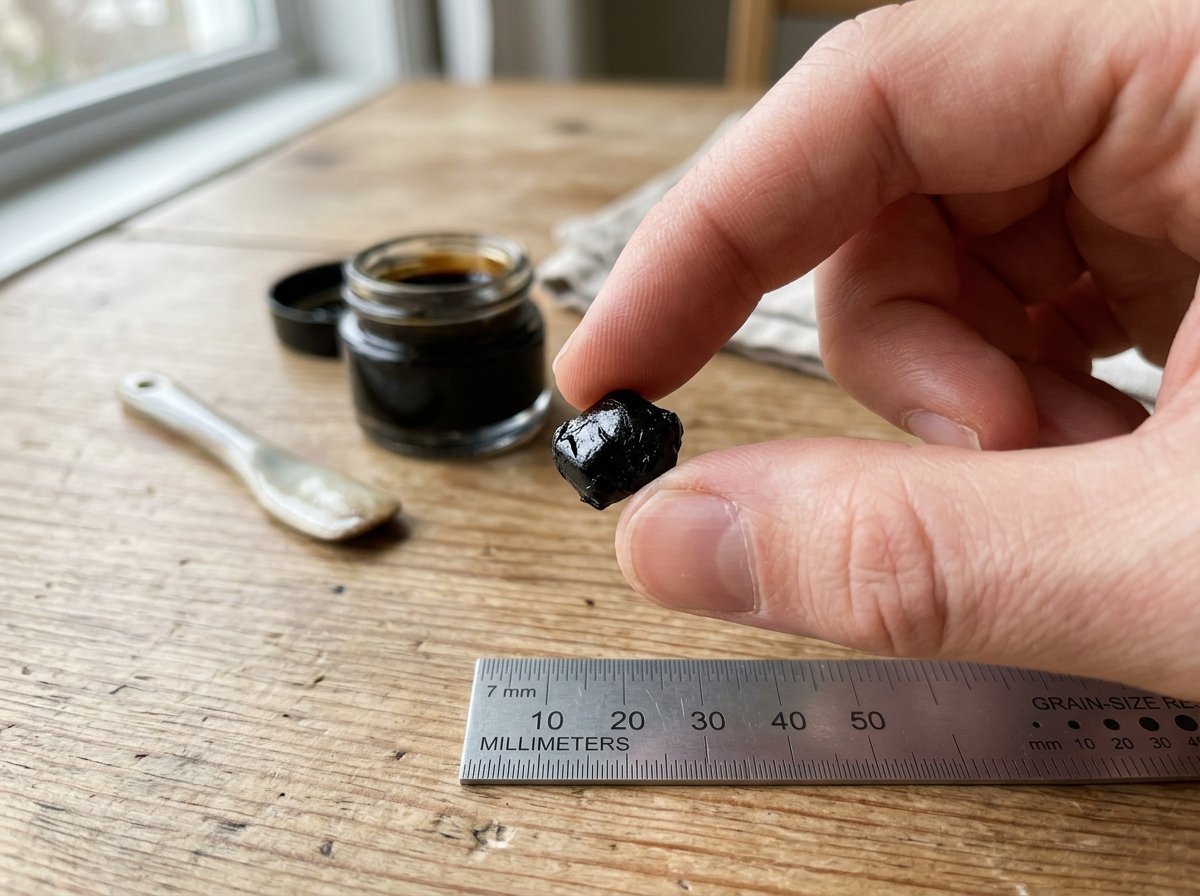
Authentic purified shilajit is sticky, pliable at room temperature, and has a distinct, slightly bitter, mineral smell, sometimes described as similar to burnt hay or damp soil. A smell that's overly sweet, chemical, or nearly odourless is a red flag.
3
Behaviour Under Heat
A small piece of real shilajit softens and becomes pliable when warmed between your fingers rather than melting into liquid or staying rock-hard.
4
Documentation
Ask for a Certificate of Analysis, or check if one is published on the product page. It should list fulvic acid percentage and heavy metal test results, at minimum.
5
The Flame Test
Some buyers test a small piece with a flame: genuine shilajit tends to bubble and puff up slightly rather than catching fire and burning like plastic or tar would. This isn't something we'd recommend as your primary check since it destroys the sample, but it's worth knowing about if you've seen it mentioned elsewhere.
6
Colour Under Light
Hold a small piece up to natural light. Genuine shilajit often shows a deep reddish-brown translucence at the edges rather than appearing uniformly, opaquely black all the way through, which is more typical of coal tar or asphalt-based fakes sold under the same name.
None of these tests are perfect on their own, but together, they catch most of the obviously adulterated product on the market. If a seller is confident in their product, they generally won't mind you asking about any of this before you buy, and a lab report settles most of these questions faster than any home test can.
How to take Shilajit
The traditional and most common way to take shilajit resin is to pinch off a piece roughly the size of a grain of rice or a small pea, about 300–500mg, and dissolve it in a cup of warm water, milk, or herbal tea. Stir until it fully dissolves, then drink.
🥄 Recommended Dosage
Dosage typically ranges from 300mg to 500mg per day for most adults, though it's sensible to start at the lower end for the first week or two and observe how your body responds before increasing. Liquid extract usually comes with a dropper marked to the same range, making this step simpler.
🌅 Best Time to Take It
Best time to take it is generally considered to be morning, on an empty stomach, since this is thought to support absorption and aligns with its traditional use for daytime energy. Some people prefer splitting the dose, taking half in the morning and half in the early evening, particularly if using it to support physical training and recovery.
📅 Daily Consistency
Consistency matters more than timing precision. Shilajit's traditional benefits are generally described as building over weeks of regular use rather than appearing after a single dose, so daily consistency for at least 4–6 weeks is a more realistic way to judge whether it's working for you than a one-off trial.
🥛 What to Mix It With
Warm milk is the most traditional pairing in Ayurvedic practice, sometimes with a small amount of honey or ghee added, both of which are considered complementary in Ayurveda rather than just flavour additions. Plain warm water works just as well if you'd rather avoid dairy. Avoid mixing shilajit into very hot or boiling liquid, since excessive heat is generally thought to reduce the potency of some of its active compounds over time.
Who tends to benefit most from a daily routine: People who train regularly, work physically demanding schedules, or simply notice a consistent afternoon energy dip are the most common long-term users, largely because shilajit's traditional effects are cumulative rather than immediate. If you're looking for something that works within the hour, this isn't that; if you're looking for a daily addition you take alongside good sleep and diet, that's the more realistic expectation to have going in.
Shilajit side effects and who should be cautious
Shilajit is generally well tolerated when it's genuinely purified and taken at a sensible dose, but a few groups should be careful.
Unprocessed or poorly purified shilajit can cause digestive discomfort, and in rare cases, has been linked to heavy metal exposure when sourced from unverified suppliers. This is almost always a purity issue rather than an inherent property of properly processed shilajit.
People with hemochromatosis or other iron-overload conditions should avoid shilajit or check with a doctor first, given its natural iron content. The same applies to anyone with sickle cell disease, since shilajit has traditionally been advised against in this context.
Pregnant and breastfeeding women, as noted above, should also consult a doctor before use, and anyone on prescription medication, particularly for blood pressure, diabetes, or blood thinners, should check for interactions before starting.
If you notice any unusual symptoms after starting shilajit, stop use and speak to a doctor rather than pushing through it.
It's also worth separating two different categories of "side effects" you'll come across when researching shilajit online. The first is genuine, physiological caution, the iron-overload and pregnancy points above, which apply regardless of how good the product is.
The second is quality-related risk, digestive upset, headaches, or worse, tied specifically to unpurified or adulterated product rather than shilajit itself. A lot of negative reviews online fall into the second category, which is exactly why the purity checks earlier on this page matter as much as the dosage guidance.
Shilajit vs Ashwagandha
These two are frequently bought together, and frequently confused as interchangeable. They're not quite the same thing.
Ashwagandha is an adaptogenic herb, primarily studied and traditionally used for stress response, sleep quality, and cortisol regulation. Shilajit is a mineral-and-fulvic-acid resin, primarily associated with energy, stamina, and mineral support.
Where ashwagandha tends to work on calming the nervous system, shilajit tends to work on supporting the body's energy production and mineral status.
Many Ayurvedic formulations combine the two precisely because they address different systems rather than duplicating the same effect, one calming, one energising, working together rather than competing.
If you're deciding between the two rather than combining them, think about which problem you're actually trying to solve. If sleep quality, stress, or a racing mind is the main issue, ashwagandha is generally the more direct match.
If low energy, poor recovery, or a general sense of running on empty is the issue, shilajit tends to be the better starting point. Neither is a stimulant, and neither works overnight, so give either a fair 4–6 week trial before deciding it isn't for you.
How to store Shilajit properly
Shilajit resin is fairly resilient, but a few storage habits noticeably extend how long it stays potent.
Keep it in the airtight glass or food-grade container it usually ships in, at room temperature, away from direct sunlight and heat sources. Resin naturally softens in warm conditions and firms up again when cool, which is normal and doesn't affect quality.
Consistently high heat over time, though, can degrade the fulvic acid content faster.
Avoid touching the resin with a wet spoon or your fingers repeatedly, since introducing moisture into the jar can encourage mould growth over time. Most sellers include or recommend a small dry spoon or spatula specifically for this reason.
Properly stored, purified shilajit resin has a long shelf life, often several years, since its low water content and mineral density naturally resist spoilage better than most organic supplements. Liquid extract should generally follow the expiry date on the bottle instead, since it's already dissolved into a water-based solution and doesn't have the same shelf stability as raw resin.
Common mistakes to avoid when buying Shilajit
❌ Choosing on price alone
Genuinely high-altitude, properly purified shilajit has a real production cost. A price that's dramatically lower than the market range for a comparable weight is a signal to check the purity documentation more carefully, not a reason to celebrate a good deal.
❌ Skipping the water test
Skipping the water and texture test on arrival. It takes two minutes and catches most obviously fake product before you've committed to using it.
❌ Blindly trusting labels
Assuming "Himalayan" on the label guarantees origin. The term is used loosely across the industry. Look for actual sourcing detail, region, altitude, or harvest information, rather than taking the word at face value.
❌ Over-dosing early
Ignoring dosage guidance and taking too much too soon. More isn't automatically better with a mineral-dense supplement like this. Start low, especially in your first two weeks.
❌ Picking wrong format
Buying resin when convenience actually matters more to you. If you know you won't reliably dissolve resin in water every morning, a pre-measured liquid extract you'll actually take consistently beats a "purer" format you abandon after a week.
❌ Skipping Lab Testing
Not checking for third-party lab testing. A brand claiming purity is not the same as a brand proving it. Independent lab verification, not just an in-house quality claim, is what actually confirms heavy metal safety and fulvic acid content.
Expecting an immediate effect: Judging shilajit after two or three days and writing it off isn't a fair test of a supplement whose traditional use is built around weeks of consistent intake. Give it the 4–6 week window before deciding either way.
Frequently asked questions
Everything you need to know about purity, dosage, safety, and usage.
Shilajit is traditionally used in Ayurveda as a rasayana to support energy, stamina, mineral intake, and overall vitality. It's commonly taken for daily energy support, recovery after physical activity, and general wellness.
For most healthy adults, purified shilajit at a standard dose of 300–500mg daily is considered safe for regular use. People with certain conditions, including iron-overload disorders, should consult a doctor first.
Check that it's sticky and pliable at room temperature, softens slowly in water rather than dissolving instantly or refusing to soften, and has a strong, mineral, slightly bitter smell. Ask the seller for a lab report showing fulvic acid content and heavy metal testing.
Most commonly, shilajit is taken in the morning on an empty stomach, dissolved in warm water or milk, since this is thought to support absorption and aligns with its traditional use for daytime energy.
Yes. Shilajit isn't gender-specific and is traditionally used by women for energy support and its mineral content. Pregnant or breastfeeding women should check with a doctor before use.
It's traditionally associated with supporting male stamina and reproductive health in Ayurvedic practice, and some studies have looked at its relationship with testosterone and sperm parameters over supplementation periods of 90 days or more.
Most guidance suggests 300–500mg per day for adults, roughly a pea-sized amount of resin. It's sensible to start at the lower end and increase gradually after observing how your body responds.
Resin is the more traditional, typically most concentrated form, dissolved in water or milk before drinking. Liquid extract is the same purified resin pre-dissolved into a dropper bottle, trading a small amount of ritual for easier, more precise daily dosing.
Genuinely purified shilajit at a sensible dose is generally well tolerated. Poorly purified or unprocessed shilajit can cause digestive discomfort or, in rare cases, heavy metal exposure, which is why purity documentation matters.
Purified shilajit is primarily composed of fulvic acid and humic acid, along with a broad mineral profile including iron, zinc, copper, magnesium, and dozens of trace elements absorbed from the rock it forms in over centuries.
High-altitude shilajit, typically collected above 16,000 feet in regions like Ladakh, Himachal Pradesh, and the Kashmir Himalayas, tends to carry the most concentrated mineral and fulvic acid profile.
Yes, they're commonly combined in Ayurvedic formulations. Ashwagandha primarily supports stress response and calm, while shilajit primarily supports energy and mineral status, so the two address different systems rather than overlapping.
Most traditional and reported benefits build gradually over 4–6 weeks of consistent daily use rather than appearing after a single dose. Judging effectiveness after only a few days isn't a reliable test.
It should be a dark brown to black, sticky, resin-like substance, soft and pliable at room temperature, with a strong, slightly bitter, mineral taste, distinct from the sweet or flavourless taste of adulterated versions.
No. Raw, unprocessed shilajit can contain heavy metals, fungal spores, and organic debris, and needs to go through proper purification (shodhana) before it's safe for consumption.
Price differences usually come down to purification quality, source altitude, and how much genuine resin versus filler is actually in the product. Properly purified, high-altitude shilajit costs more to produce than diluted or poorly processed versions.
Keep it in an airtight container at room temperature, away from direct sunlight and heat, and use a dry spoon each time to avoid introducing moisture, which can encourage mould over time.
Yes, in topical Ayurvedic skincare formulations, shilajit's antioxidant and mineral content is used to support skin's natural resilience against everyday environmental stress, though this is a newer use compared to its traditional internal applications.
Yes. It's called shilajit or shilajeet in Hindi, silajathu in Telugu and Kannada, and mala kanikam in Tamil, referring to the same substance across regional Ayurvedic traditions.
There's limited direct evidence for weight loss specifically. Shilajit's traditional role in supporting energy and metabolism means it's sometimes used alongside diet and exercise, but it shouldn't be relied on as a standalone weight-loss product.
Shilajit is commonly combined with ashwagandha, safed musli, and similar Ayurvedic herbs. If you're taking prescription medication or other supplements regularly, it's worth checking with a doctor for interactions specific to your situation rather than assuming it's automatically safe to stack.
Raw shilajit is the unprocessed material scraped directly from rock seepage, which can contain impurities and isn't safe to consume as-is. Purified shilajit has gone through shodhana, a filtering and reduction process that removes contaminants and concentrates the active compounds.
Yes. Shilajit resin and liquid extract are both mineral-organic substances, not derived from animals, and are generally considered vegan-friendly.
Shop Himalayan Shilajit you can actually verify
Every batch here goes through proper purification and testing before it reaches you, and we're glad to share the lab report for whatever you're buying. Pick resin or liquid extract below, and check the dosage guide above before your first dose.