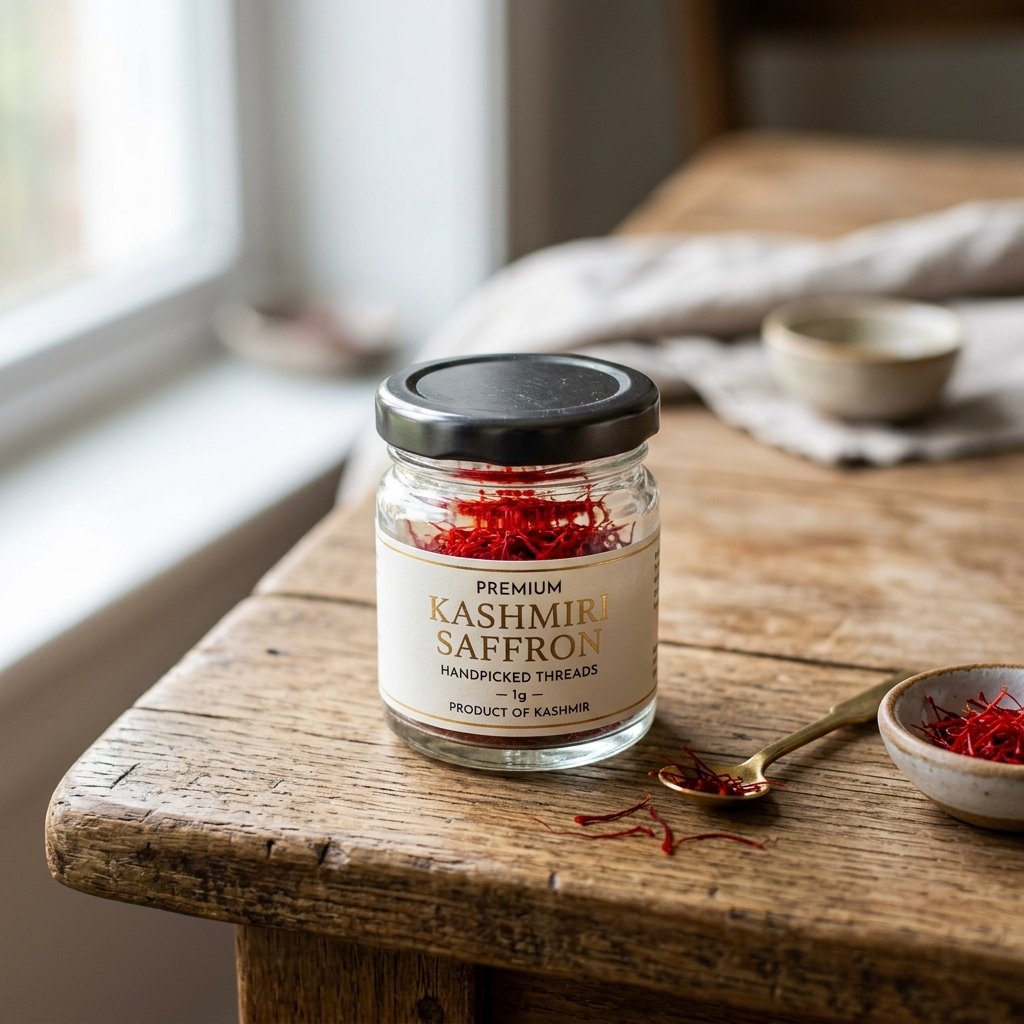
Kashmiri Saffron, renowned globally as the "Red Gold," is a spice derived from the flower of Crocus sativus. Cultivated primarily in the Pampore region of Kashmir, it is celebrated for its deep crimson-red stigmas, robust aroma, and distinctive flavor profile. The unique agro-climatic conditions of the Kashmir Valley, including its rich, well-drained soil and temperate climate, contribute to the superior quality of this saffron, making it highly sought after in culinary and medicinal applications.
Why Kashmiri Saffron is Unique
Unlike saffron produced in other parts of the world, Kashmiri saffron is distinguished by its longer and thicker stigmas, its deep red color, and its potent aroma. It contains higher levels of crocin, the chemical responsible for the color, and safranal, which gives it its distinct aroma. This high concentration of active compounds means that you only need a few strands to impart a rich flavor and vibrant color to your dishes.
Health Benefits of Saffron
Beyond its culinary uses, saffron has been revered in traditional medicine for centuries. It is packed with antioxidants, which help protect cells from oxidative stress. Regular consumption of saffron is believed to improve mood, alleviate symptoms of mild depression, and promote relaxation. Additionally, it has been linked to improved cognitive function and enhanced memory.
Culinary Uses
In the kitchen, Kashmiri saffron is a versatile ingredient. It is a staple in traditional Kashmiri cuisine, used to flavor the famous Kahwa (a traditional green tea) and various rich, slow-cooked meat dishes. It is also widely used in Indian sweets, biryanis, and European dishes like paella and risotto. To extract the maximum flavor and color, it is recommended to steep the saffron strands in warm water or milk before adding them to your recipe.
When purchasing saffron, it is crucial to ensure authenticity, as the high value of the spice often leads to adulteration. Authentic Kashmiri saffron will have a sweet, floral aroma but a slightly bitter taste. The strands should be dry, brittle, and uniform in color.